
Why Your Home Feels Warmer Upstairs Even When the Thermostat Is Set Correctly
If your upstairs rooms feel uncomfortably warm while the main floor stays comfortable, the problem usually isn't your HVAC system. Learn what causes temperature imbalances between floors and how to fix them.
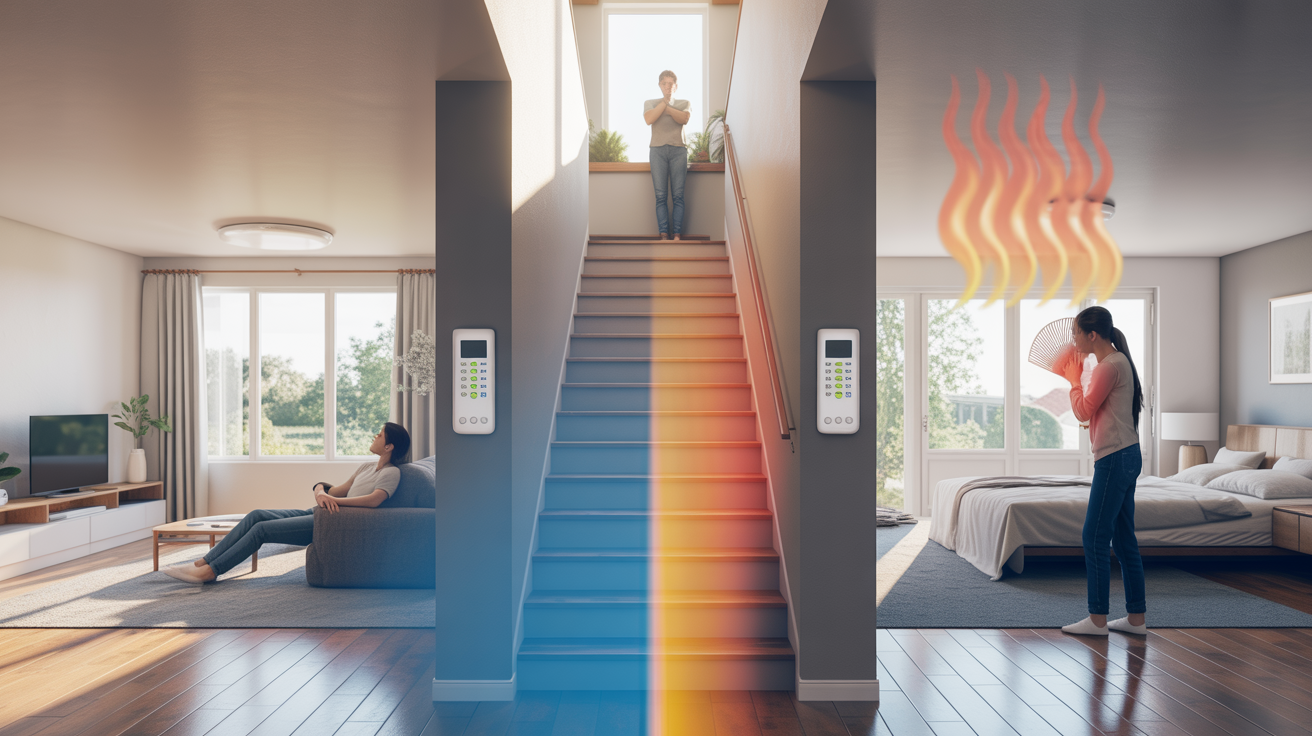
If you've ever walked upstairs in your Missouri home during summer and felt like you entered a different climate zone, you're not alone. This temperature imbalance frustrates homeowners throughout Springfield, Nixa, Ozark, and Republic, especially those who watch their energy bills climb while comfort remains elusive.
The thermostat downstairs reads 72 degrees. The air conditioning runs consistently. Yet the bedrooms upstairs feel significantly warmer, sometimes by ten degrees or more. Many homeowners assume their HVAC system needs repair or replacement, but the equipment usually isn't the problem.
The real issues lie within the building itself—specifically in how heat moves through the structure, how air escapes, and how the attic influences everything happening on the upper floor.
Understanding Why Heat Concentrates Upstairs
Warm air naturally rises. This fundamental principle of physics explains much of what happens inside multi-story homes, though the full picture involves several interconnected factors.
As your air conditioning system cools the lower level, that dense, cool air settles toward the floor. Meanwhile, any warm air present in the home migrates upward. In a perfectly sealed building, this wouldn't create dramatic temperature differences because the cooling system would eventually reach equilibrium throughout the structure.
But homes aren't perfectly sealed. Air moves constantly between indoors and outdoors, between conditioned and unconditioned spaces. This movement creates pressure dynamics that concentrate heat in upper areas while simultaneously pulling cooler air downward and out of the living space.
The vertical movement of air through a structure is sometimes called the stack effect. During summer, this process works against your comfort in ways that become more pronounced as outdoor temperatures rise. The warmer it gets outside, the stronger the pressure differences become, and the more aggressively your home draws cool air out while allowing warm air to accumulate above.
The Attic's Influence on Upper Floor Temperatures
Perhaps no single factor affects upstairs comfort more than what happens in the attic. During Missouri summers, attic temperatures routinely exceed 130 degrees when outdoor temperatures reach the 90s. That superheated space sits directly above your bedrooms, separated only by ceiling materials and whatever insulation exists between them.
Traditional insulation laid across the attic floor provides some resistance to heat transfer, but it has significant limitations. Heat radiates downward from the scorching roof deck and attic air, eventually working through insulation and into the rooms below. The longer summer days give this heat transfer process more hours to work, which is why upstairs rooms often feel warmest during evening hours even after the sun goes down.
Equally problematic are the gaps and penetrations that allow hot attic air to move directly into living spaces. Recessed light housings, HVAC supply boots, electrical penetrations, and gaps around plumbing stacks all create pathways. These openings might seem small individually, but collectively they allow substantial heat migration that no amount of thermostat adjustment can overcome.
We've explored this relationship between attic conditions and home comfort in our guide to attic spray foam insulation, which details how addressing the attic transforms upper floor temperatures.
Air Leakage Creates Pressure Imbalances
Beyond the direct heat transfer from attic to ceiling, air leakage throughout the building envelope compounds the problem. Upper floors typically experience more significant air exchange with the outdoors than lower levels, partly due to the stack effect and partly because of construction details common in many homes.
Windows on upper floors face different wind exposures than those below. Roof penetrations for vents, chimneys, and other systems create additional leak points that don't exist on lower levels. The ceiling plane between conditioned space and the attic often contains more penetrations than exterior walls, making it particularly vulnerable to air movement.
When conditioned air escapes through these pathways, it creates negative pressure within the home. That negative pressure draws replacement air from wherever it can enter—often through gaps in lower levels or through the crawl space and rim joists. This constant air exchange means your cooling system works against a moving target, continuously conditioning air that promptly escapes while replacement air brings fresh heat into the structure.
As we've covered in our article about the hidden costs of poor insulation, these air leakage patterns translate directly into higher energy bills and reduced comfort.
Why HVAC Adjustments Rarely Solve the Problem
Faced with uncomfortably warm upstairs rooms, many homeowners try various HVAC adjustments. They close vents downstairs to force more air upward. They lower thermostat settings dramatically. They run the system continuously rather than cycling. Some even install secondary systems or portable units specifically for upper floors.
These approaches provide limited relief at best, and often create new problems. Closing vents increases pressure within ductwork, potentially causing leaks and reducing system efficiency. Running equipment continuously accelerates wear while adding to energy costs. Supplemental systems consume additional electricity without addressing why the imbalance exists.
The core issue remains unchanged: heat enters the upper floor faster than the cooling system can remove it, and conditioned air escapes faster than the system can replace it. Until the building envelope stops allowing this exchange, no amount of equipment adjustment produces lasting comfort.
This is why understanding building performance matters more than focusing solely on mechanical systems. As we've discussed in our article about thermal retention, homes that control air movement and heat transfer require far less from their HVAC equipment while delivering better results.
How Proper Air Sealing and Insulation Restore Balance
Addressing temperature imbalances between floors requires treating the causes rather than the symptoms. This means stopping heat from entering through the ceiling and preventing conditioned air from escaping through gaps and penetrations.
Spray foam insulation accomplishes both objectives simultaneously. When applied to the attic floor or the underside of the roof deck, it creates a continuous barrier that blocks both conductive heat transfer and air movement. There are no gaps between batts, no spaces around penetrations, and no pathways for superheated attic air to migrate into bedrooms below.
The difference in upper floor temperatures can be remarkable. Rooms that previously ran ten degrees warmer than the main level often achieve nearly identical conditions after proper air sealing and insulation. The cooling system reaches its target temperature faster, cycles less frequently, and maintains more consistent conditions throughout operation.
For Missouri's climate specifically, controlling both heat and humidity matters. Summer brings not just warmth but moisture that compounds discomfort. Spray foam's air barrier properties help manage both, as we've explained in our article about spray foam for Missouri's humid summers.
Long-Term Benefits of Addressing the Root Cause
Investing in proper insulation and air sealing delivers returns that extend far beyond summer comfort. The same improvements that keep upper floors cooler in July keep them warmer in January. Energy costs decrease year-round because the HVAC system operates under manageable conditions rather than fighting constant losses.
The durability of spray foam means these benefits persist for decades. Unlike traditional materials that can settle, shift, or lose effectiveness over time, spray foam maintains its performance characteristics indefinitely. We've covered this longevity in our discussion of spray foam's lifespan and durability.
Achieving Whole-Home Comfort
Temperature differences between floors signal that the building envelope isn't performing as it should. The thermostat may display accurate readings for where it's located, but conditions elsewhere in the home tell a different story.
Resolving this imbalance means addressing air leakage and heat transfer at their sources—particularly in the attic, but potentially in walls, rim joists, and other areas as well. When the building envelope effectively separates conditioned space from outdoor conditions, temperature consistency follows naturally.
For homeowners throughout Southwest Missouri tired of sacrificing comfort on upper floors or paying premium energy costs for inadequate results, proper air sealing and insulation offer a permanent solution. The goal isn't just cooler upstairs rooms—it's a home where every level feels comfortable without extraordinary effort from mechanical systems or monthly utility bills.