
The Hidden Cost of Poor Insulation Most Homeowners Never Calculate
Monthly utility bills reveal only a fraction of what inadequate insulation actually costs. From accelerated HVAC wear to moisture damage and rooms you avoid using, the true financial impact accumulates in places most homeowners never think to look.
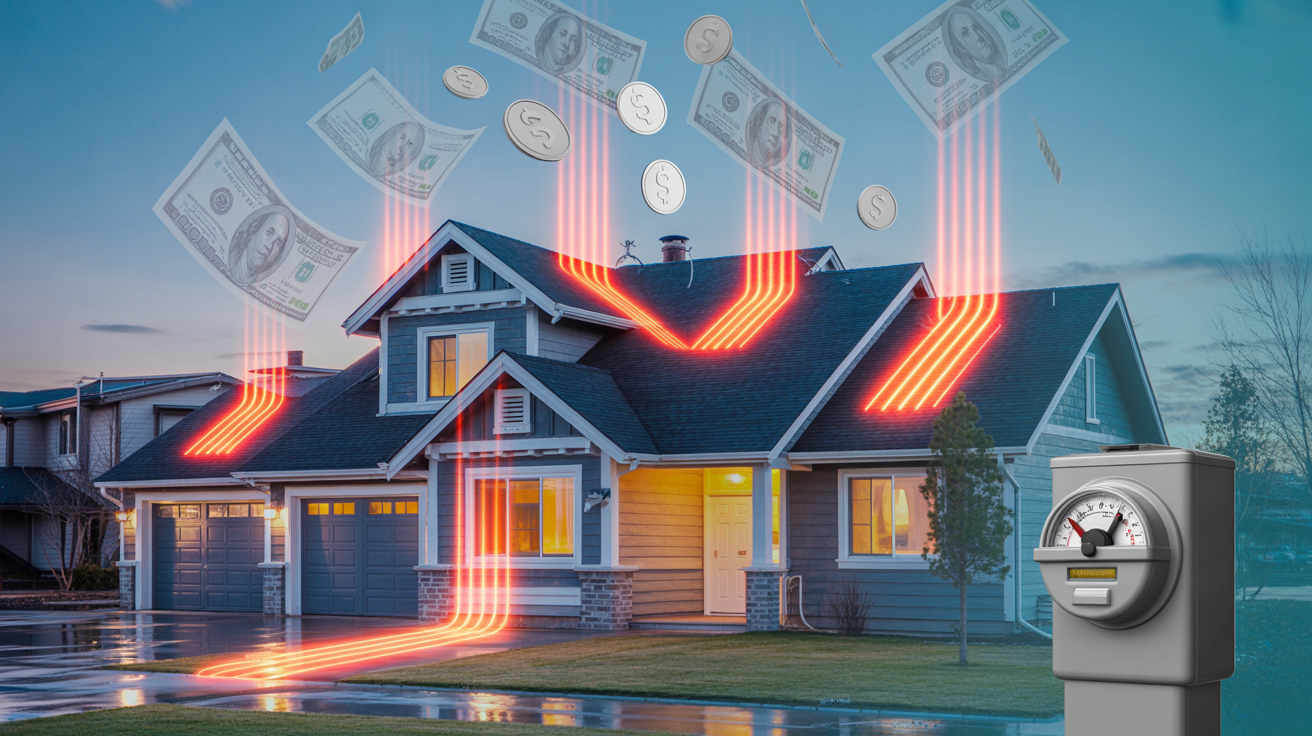
Every homeowner understands that insulation affects energy bills. When winter arrives and heating costs climb, the connection between inadequate insulation and higher utility payments becomes obvious. What remains far less apparent are the numerous other expenses that poor insulation generates—costs that accumulate quietly over years and rarely appear on any single invoice. These hidden expenditures often exceed the visible utility increases by substantial margins, yet most homeowners never connect them to their insulation problems.
The Expenses You See Versus the Ones You Don't
Monthly energy bills represent the most visible consequence of insulation deficiencies. When conditioned air escapes through gaps and thermal barriers fail to slow heat transfer, heating and cooling systems work harder to maintain comfortable temperatures. This elevated energy consumption appears clearly on utility statements, prompting many homeowners to consider insulation improvements.
However, energy waste constitutes only the surface layer of costs. Beneath that obvious expense lies a network of secondary financial impacts that rarely get attributed to their actual source. Equipment wear, structural repairs, comfort-driven purchases, and rooms that effectively become seasonal storage space all trace back to insulation problems, yet homeowners frequently treat these as unrelated household expenses.
Understanding the complete financial picture requires looking beyond the thermostat and the utility meter. The true cost of inadequate insulation includes everything from shortened equipment lifespans to moisture damage that develops over years before becoming visible. These accumulated expenses often make insulation upgrades far more economical than they initially appear.
How Air Leakage Drains Household Budgets
Air infiltration works constantly against household finances. Unlike visible damage that demands immediate attention, air leakage operates invisibly—a persistent drain that increases expenses across multiple categories without ever announcing its presence. The cumulative effect resembles a slow leak in a financial account, imperceptible in any given month but substantial when measured across years.
When outdoor air enters a home through gaps in the building envelope, heating and cooling systems must condition that air repeatedly throughout the day. A house with significant air leakage might exchange its entire air volume multiple times daily, forcing HVAC equipment to heat or cool the same space continuously. This repetitive conditioning consumes energy that proper air sealing would eliminate entirely.
We've covered the relationship between air sealing and energy performance extensively in our article about what makes spray foam a long-term investment. The continuous barrier that quality insulation creates stops the air exchange cycle that drives so much unnecessary energy consumption.
Beyond direct energy costs, air leakage accelerates wear on heating and cooling equipment. Systems designed to cycle periodically instead run nearly continuously in poorly sealed homes. This extended operation shortens equipment lifespan, increases maintenance frequency, and advances the timeline for expensive replacement. A furnace rated for twenty years of normal operation might require replacement after twelve or thirteen years when forced to compensate for constant air infiltration.
The Compounding Cost of Overworked HVAC Systems
Heating and cooling equipment represents one of the largest mechanical investments in any home. When insulation deficiencies force this equipment to work beyond its design parameters, the financial consequences extend far beyond elevated utility bills. Repair costs increase, efficiency degrades faster, and replacement timelines accelerate—all consequences that homeowners rarely trace back to insulation problems.
HVAC systems operating in poorly insulated homes face constant strain. Compressors run longer cycles. Furnace igniters fire more frequently. Blower motors operate for extended periods. Each of these components has a finite operational lifespan measured in cycles or hours. Extended operation consumes that lifespan faster, converting years of expected service into months.
The efficiency losses compound over time as well. Equipment that runs continuously operates at elevated temperatures, accelerating wear on seals, bearings, and electrical components. As these parts degrade, system efficiency drops further, creating a feedback loop where declining performance drives even harder operation. A system that achieved ninety percent efficiency when new might function at seventy-five percent efficiency after years of compensating for insulation deficiencies.
As explained in our guide on how spray foam performs in Missouri's climate, the extreme temperature swings and humidity challenges in this region place particular demands on HVAC equipment. Homes with inadequate insulation face amplified versions of these stresses, driving repair and replacement costs well above regional averages.
Moisture Damage That Develops Invisibly
Poor insulation creates conditions that promote moisture accumulation within building assemblies. When warm interior air meets cold surfaces inside walls or attics, condensation forms on materials never designed to handle sustained moisture exposure. This hidden dampness encourages mold growth, degrades structural components, and eventually produces damage requiring expensive remediation.
The financial impact of moisture problems frequently surprises homeowners because the damage develops out of sight. By the time visible signs appear—staining on ceilings, musty odors, or paint peeling from walls—extensive damage has often already occurred within wall cavities or attic spaces. Repair costs at this stage typically run into thousands of dollars, addressing not just the visible symptoms but the underlying structural degradation.
Traditional insulation materials often exacerbate moisture problems rather than preventing them. Fiberglass batts readily absorb moisture, losing their thermal performance while providing a medium for mold growth. Wet insulation pressed against wood framing accelerates rot and creates conditions perfect for pest infestations. These cascading problems generate repair expenses that dwarf the original energy waste that first indicated insulation deficiencies.
You can learn more about how proper insulation prevents moisture issues in our previous post on basement insulation. The vapor control and air sealing characteristics of quality insulation eliminate the conditions that allow moisture damage to develop.
The Lifestyle Costs Nobody Tallies
Beyond quantifiable expenses, poor insulation imposes lifestyle costs that affect daily comfort and home functionality. Rooms that become uncomfortably hot in summer or frigid in winter effectively shrink the usable space in a home. Bonus rooms over garages sit empty during temperature extremes. Basement spaces remain too cold for comfortable occupation. These unused square feet represent investment that delivers no return.
Many homeowners respond to comfort deficiencies by purchasing supplemental equipment. Space heaters appear in cold bedrooms. Portable air conditioners cool home offices. Fans circulate air in stuffy rooms. Each purchase represents additional expense driven by insulation inadequacy—equipment costs, operating expenses, and the inconvenience of managing multiple climate control devices.
The productivity implications extend beyond simple comfort. As discussed in our article about home office comfort, temperature fluctuations and drafts directly impair concentration and work quality. For remote workers, the inability to maintain consistent conditions in a home office translates to reduced productivity—a cost that never appears on any statement but affects income and career advancement nonetheless.
Why Inexpensive Insulation Becomes Costly Over Time
Initial installation cost often drives insulation decisions, leading many homeowners toward the least expensive options available. This approach makes sense when comparing identical products, but insulation choices involve significant performance differences that determine long-term value. Selecting insulation based solely on upfront cost frequently results in higher total expenditure over the ownership period.
Budget insulation materials typically provide thermal resistance without addressing air sealing. Fiberglass batts installed to code levels stop some heat transfer but allow air to move freely through and around the material. This air movement carries heat directly past the insulation, undermining the thermal barrier that the installation was meant to create. The energy savings that justified the original purchase never fully materialize.
Additionally, less expensive materials often degrade faster than premium alternatives. Settling, moisture absorption, and compression reduce performance over time, meaning the insulation delivers progressively less value each year. A material that provided adequate performance initially might function at half its rated capacity after a decade, requiring supplemental installation or complete replacement.
The professional installation process also affects long-term performance. As detailed in our guide on what happens during professional spray foam installation, proper application ensures materials perform as designed. Insulation installed incorrectly—with gaps, compression, or inadequate coverage—never delivers its rated performance regardless of the material's inherent quality.
Calculating the Complete Cost of Homeownership
Smart financial decisions require complete information. When evaluating insulation options, considering only installation cost produces misleading comparisons. The relevant calculation encompasses installation expense plus ongoing energy costs plus equipment wear plus potential repair expenses plus comfort impacts over the expected ownership period.
This comprehensive view often reveals that premium insulation options cost less over time than budget alternatives. Higher upfront investment in quality materials and professional installation generates returns through reduced energy consumption, extended equipment life, prevented moisture damage, and improved space utilization. These combined savings frequently exceed the additional initial expense within the first few years.
For homeowners planning to remain in their properties long-term, insulation quality directly affects total ownership cost. Every dollar saved through inadequate initial investment typically generates multiple dollars in subsequent expenses—expenses that arrive sporadically and disguise their connection to the original insulation decision.
Making Decisions With Complete Information
The hidden costs of poor insulation remain hidden only because homeowners rarely connect scattered expenses to their common source. Once understood, the relationship between insulation quality and total homeownership cost becomes clear. Energy bills, equipment repairs, moisture damage, supplemental heating and cooling purchases, and underutilized spaces all trace back to how effectively the building envelope manages heat transfer and air movement.
Proper insulation addresses these interconnected costs simultaneously. Quality materials professionally installed create thermal barriers that reduce energy consumption while providing air sealing that prevents the moisture problems and equipment strain that drive so many secondary expenses. The investment generates returns across multiple budget categories, not just the utility bill that first prompts most homeowners to consider improvements.
For Missouri families evaluating their options, understanding the complete cost picture enables genuinely informed decisions. The numbers that matter most aren't limited to what appears on monthly statements—they include all the expenses that inadequate insulation quietly generates throughout the years of homeownership.