
How Spray Foam Helps Maintain Comfort in Sunrooms
Sunrooms and enclosed patios face unique temperature swings due to glass-heavy construction. Discover how spray foam insulation transforms these spaces into comfortable, year-round living areas.
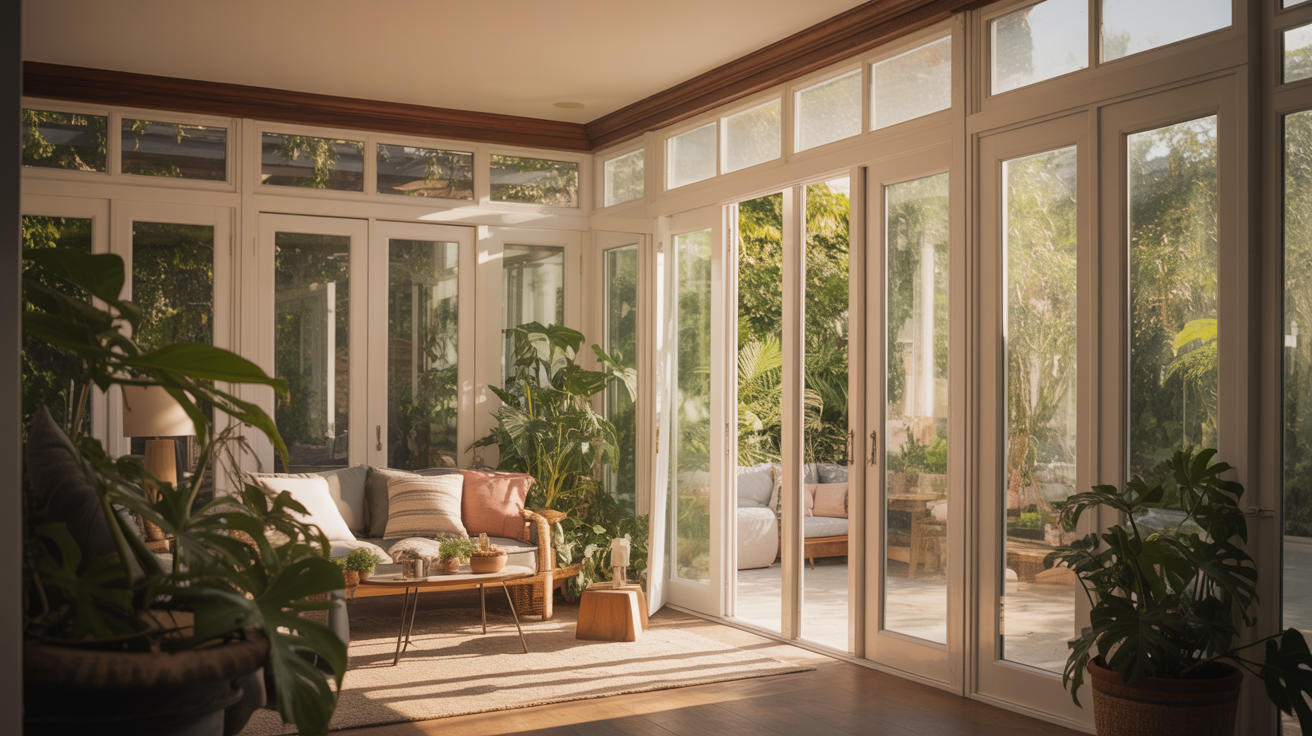
Sunrooms rank among the most appealing features a home can offer. They invite natural light, extend usable living space, and create a connection to the outdoors without full exposure to the elements. Yet for many homeowners in Southwest Missouri, these glass-heavy rooms become seasonal disappointments—sweltering through July and frigid by December. The root of that frustration almost always traces back to how the non-glass portions of the room handle heat transfer and air movement.
Why Sunrooms Struggle With Temperature Extremes
A sunroom's defining characteristic—abundant glazing—is also its greatest thermal liability. Glass transmits solar radiation far more readily than any wall assembly. During morning hours, east-facing panels flood the space with radiant energy that heats surfaces, furniture, and flooring. By midday, a south-facing sunroom can gain enough thermal energy to feel oppressive even when the rest of the house remains comfortable. Then, once the sun sets, that same glass becomes a pathway for rapid heat loss, and the room temperature drops faster than any other space in the home.
What many homeowners overlook is that glass isn't the only contributor to these wild temperature swings. The knee walls beneath window lines, the ceiling or roof deck above, the rim joist connections where the sunroom meets the original structure, and the transition framing around door openings all play critical roles. When these solid components lack adequate insulation and air sealing, they compound the thermal instability that glass alone creates.
The Problem With Conventional Approaches
Traditional fiberglass batts or rigid board insulation installed in sunroom walls and ceilings often underperform in these applications. The geometry of sunroom framing tends to be irregular—cathedral ceilings with varying rafter depths, angled transitions between the main house and the addition, and narrow wall cavities that don't accommodate standard batt widths without compression. Compressed fiberglass loses a significant portion of its rated thermal resistance, meaning the installed performance rarely matches the labeled R-value.
Beyond thermal resistance, conventional materials leave gaps at framing intersections, around electrical penetrations, and along the joint where the sunroom attaches to the existing building envelope. These gaps create pathways for conditioned air to escape and unconditioned air to infiltrate. In a room surrounded by glass, even modest air leakage accelerates the temperature swings that already challenge the space. We've covered this dynamic in more detail in our article about how spray foam performs in Missouri's climate, where humidity and temperature variability amplify the consequences of envelope imperfections.
How Air Leakage Compounds Glass-Related Challenges
In a conventionally framed room, air moves through the building envelope in response to pressure differences created by wind, stack effect, and mechanical systems. Sunrooms are particularly vulnerable because they typically have more exterior surface area relative to their volume than standard rooms. Every linear foot of framing intersection, every penetration for wiring or plumbing, and every connection point between old construction and new represents a potential air pathway.
When warm, humid summer air infiltrates through these gaps, it carries moisture that elevates indoor humidity levels. The glass surfaces in a sunroom don't absorb or buffer that moisture the way drywall and wood framing do in conventional rooms. The result is a space that feels sticky and uncomfortable even when the thermostat reads a reasonable temperature. During winter, the reverse occurs—cold, dry air seeps in and mixes with heated indoor air, creating drafts that make the room feel several degrees colder than the thermometer indicates.
This interaction between air leakage and the thermal properties of glass creates a feedback loop. The HVAC system works harder to compensate, energy consumption rises, and the sunroom still never feels quite right. As explained in our guide on the hidden costs homeowners overlook with poor insulation, these inefficiencies accumulate into meaningful expenses over a heating and cooling season.
What Spray Foam Changes in a Sunroom
Spray foam insulation addresses both thermal resistance and air sealing simultaneously, which is precisely why it transforms sunroom performance. When applied to the knee walls, ceiling cavities, rim joists, and transition framing of a sunroom, closed-cell spray foam creates a continuous barrier that conforms to irregular geometries without gaps or compression. It adheres directly to substrates, filling voids around wiring, blocking air pathways at framing connections, and maintaining full contact with surfaces regardless of cavity shape.
The material's closed-cell structure provides high thermal resistance per inch of thickness, which matters in sunroom applications where cavity depth may be limited. A three-inch application delivers meaningful insulation value without requiring deep wall assemblies that would reduce interior space. More importantly, the spray foam's air-impermeable nature eliminates the infiltration pathways that conventional insulation leaves open.
For the ceiling assembly—often the most problematic area in a sunroom—spray foam applied directly to the underside of the roof deck turns the entire cavity into conditioned space. This approach prevents the extreme temperature differentials that develop when an uninsulated or poorly insulated ceiling sits between a sun-heated roof surface and the occupied room below. You can learn more about how this installation approach works in our previous post on the professional spray foam installation process.
Long-Term Comfort Through Every Season
The transformation is most evident during the transitional months that define Missouri's Ozarks climate. In early spring, when daytime highs reach the mid-sixties but nighttime temperatures still dip into the thirties, a properly insulated sunroom maintains stable conditions without dramatic temperature cycling. The foam's thermal mass effect—combined with its air barrier properties—slows the rate at which the room responds to exterior temperature changes, creating a buffer that smooths out the peaks and valleys.
Summer performance improves because the insulated non-glass surfaces no longer contribute additional heat gain to a room already absorbing solar energy through its windows. The HVAC system addresses the glass-related heat gain without simultaneously fighting conductive and convective losses through walls and ceilings. This targeted load reduction often allows the existing system to maintain comfortable conditions without the supplemental heating or cooling equipment many sunroom owners resort to installing.
Winter comfort improves through the same mechanism in reverse. The insulated walls and ceiling retain heated air more effectively, and the elimination of drafts removes the wind-chill effect that makes under-insulated sunrooms feel uninhabitable during cold stretches. The room reaches and maintains its target temperature using less energy, and occupants experience consistent warmth rather than the cycle of overheating near vents and shivering near glass.
The durability of spray foam means these performance characteristics persist for decades without degradation. Unlike fiberglass, which can settle, absorb moisture, or lose loft over time, closed-cell spray foam maintains its structural integrity and thermal properties throughout the life of the building. As discussed in our article about insulation durability and lifespan, this longevity makes the initial investment increasingly valuable with each passing year.
Reclaiming Year-Round Living Space
A sunroom that functions comfortably only four or five months of the year represents underutilized square footage and a missed opportunity. Proper insulation of the non-glass building envelope converts that seasonal space into a genuine extension of the home's living area. Morning coffee in January, reading on a summer afternoon without feeling trapped in a greenhouse, hosting guests during the unpredictable shoulder seasons—these everyday uses become practical realities rather than compromises.
The energy efficiency gains reinforce the comfort improvements. A sunroom that doesn't hemorrhage conditioned air or absorb unwanted heat through uninsulated surfaces places far less demand on the home's mechanical systems. Utility costs reflect that reduced demand, and the HVAC equipment experiences less wear from constant cycling. The combination of comfort, efficiency, and durability represents exactly the kind of compound return that makes building envelope improvements, as we've explored in our discussion of spray foam as a long-term investment, worth careful consideration for any homeowner looking to get more from the spaces they already have.