
Why Your Upstairs Bathroom Is Always Colder or Hotter Than the Rest of the House
That second-floor bathroom that freezes in winter and swelters in summer isn't just uncomfortable—it's signaling deeper problems with your home's thermal envelope. Understanding why these spaces behave so differently reveals solutions that restore year-round comfort.
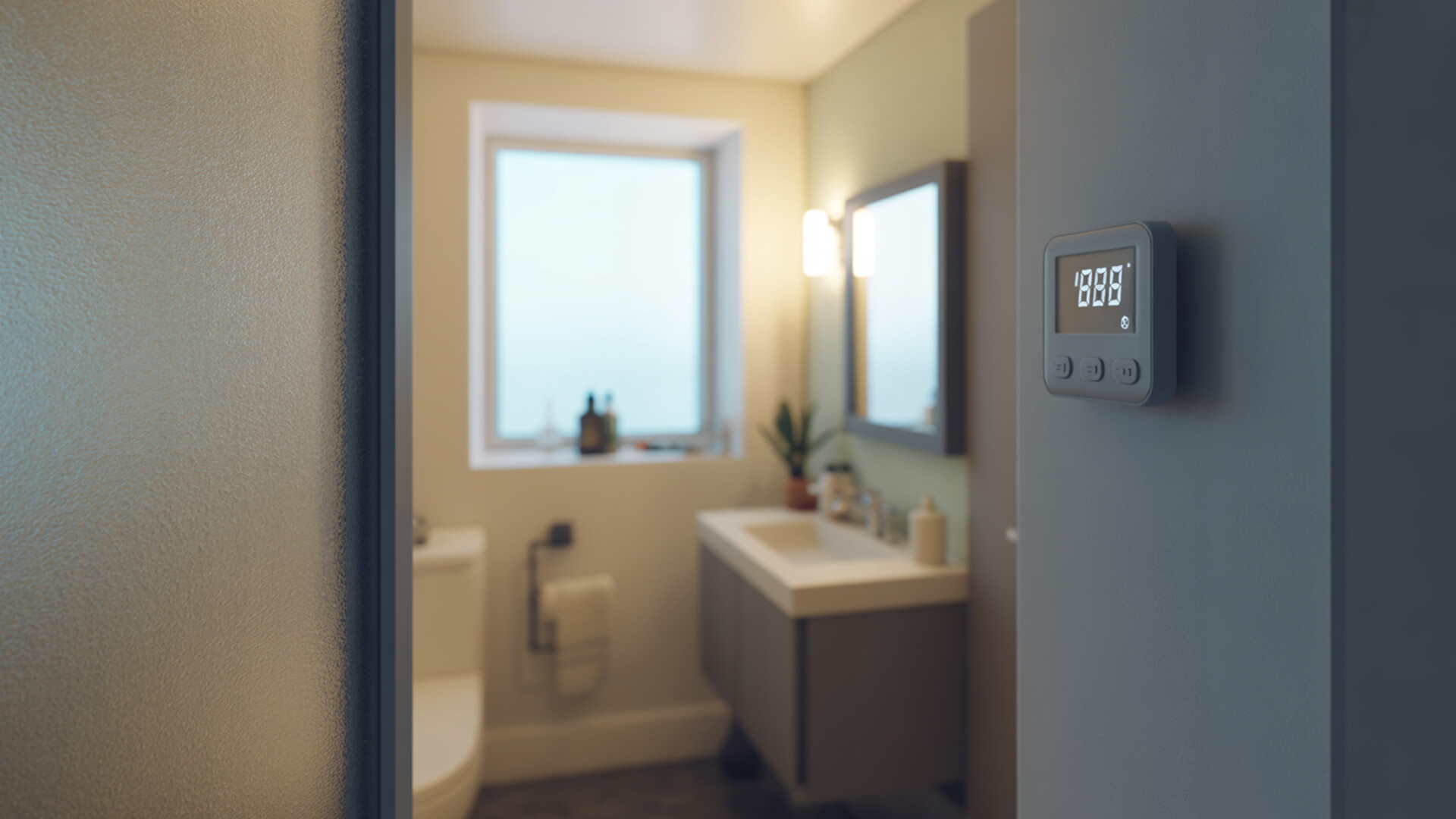
Second-floor bathrooms occupy a unique position in residential construction. Tucked beneath roof assemblies, penetrated by plumbing vents and exhaust ducts, and subjected to moisture loads that other rooms never experience, these spaces face thermal challenges that make consistent comfort genuinely difficult to achieve. When homeowners notice their upstairs bathroom running ten or fifteen degrees different from the hallway just outside the door, they're witnessing the combined effects of several building science principles working against them.
The Vertical Temperature Problem
Heat behaves predictably in multi-story structures. Warm air rises through every available pathway, collecting near ceilings and upper floors while cooler air settles toward ground level. This natural convection creates baseline temperature differences between floors that HVAC systems must constantly work to overcome.
In bathrooms specifically, this vertical movement interacts with the room's unique characteristics to amplify discomfort. The relatively small floor area means temperature changes happen quickly—a bathroom can shift from comfortable to uncomfortable in minutes when conditions change. The hard surfaces typical of bathroom construction (tile, porcelain, glass) hold temperature poorly, feeling cold to the touch even when air temperature seems acceptable.
We've covered the broader implications of vertical air movement in our article about spray foam in multi-story homes. The stack effect described there operates continuously in two-story houses, and bathrooms positioned at the top of this vertical column experience the most dramatic temperature variations.
Living Directly Beneath the Attic
Proximity to unconditioned attic space creates thermal conditions that other rooms simply don't face. During summer months, attic temperatures in Missouri homes routinely exceed 130 degrees. That extreme heat radiates downward through ceiling assemblies, turning the room immediately below into an oven regardless of thermostat settings.
Winter reverses the problem without solving it. Cold attic air chills ceiling surfaces, creating uncomfortable radiant conditions even when the bathroom's air temperature measures adequately warm. Standing beneath a cold ceiling produces a sensation of chill that no amount of heated air fully counteracts—the body loses heat through radiation to that cold surface faster than warm air can compensate.
Bathroom ceilings often contain additional complications that worsen attic proximity problems. Recessed light fixtures create thermal weak points where minimal insulation separates conditioned space from attic extremes. Exhaust fan housings penetrate the ceiling plane entirely, creating direct connections to unconditioned space that leak air continuously even when the fan sits idle.
Where Pipes and Ducts Pierce the Envelope
Plumbing penetrations represent some of the most significant thermal bypasses in residential construction. Every drain line, vent stack, and water supply pipe that passes through floors, walls, or ceilings creates an opening in the building envelope. In bathrooms, these penetrations concentrate densely—toilets, sinks, showers, and tubs each require multiple pipes that must connect to the drainage system and vent through the roof.
These openings rarely receive adequate sealing during original construction. Plumbers focus on water-tight connections, not air-tight assemblies. The gaps left around pipes after installation allow air to move freely between conditioned living space and wall cavities, floor assemblies, or the attic above. This air movement carries both temperature and moisture, contributing to the comfort problems homeowners notice.
Exhaust fan ducting creates similar pathways. The duct connecting a bathroom fan to its roof termination passes through attic space, and the damper that supposedly prevents backdrafts rarely seals completely. Cold attic air leaks back through these connections, particularly when wind creates pressure differences across the roof. Some homeowners notice their bathroom exhaust fan cover moving slightly on windy days—visible evidence of air moving through what should be a closed pathway.
When Moisture Meets Temperature Extremes
Bathrooms generate substantial moisture during normal use. A single shower can release several pints of water vapor into a small enclosed space. This moisture must go somewhere, and its interaction with temperature variations creates problems beyond simple discomfort.
When warm, humid bathroom air contacts cold surfaces—the underside of a poorly insulated ceiling, the interior face of an exterior wall, or the surface around a single-pane window—condensation forms. This moisture accumulation encourages mold growth, degrades building materials, and perpetuates the conditions that created the temperature problems initially. Wet insulation loses its thermal effectiveness, making cold surfaces colder still.
As explained in our guide on Missouri's humid summers, the regional climate adds another layer to these moisture challenges. High outdoor humidity during summer months makes it harder for bathroom moisture to dissipate, while extreme winter cold creates the temperature differentials that promote condensation. Missouri bathrooms face moisture stress in both directions seasonally.
Why Fiberglass Fails in Bathroom Applications
Traditional batt insulation performs poorly in the conditions bathrooms create. The material provides thermal resistance only when air remains stationary within and around the fibers. In bathrooms, with their concentrated penetrations and moisture loads, air rarely stays still long enough for fiberglass to function as designed.
Every pipe penetration creates an air pathway that bypasses the insulation entirely. Warm bathroom air rises through these openings, pulling conditioned air out of the living space and drawing unconditioned air in to replace it. The fiberglass batts surrounding these penetrations do nothing to slow this air exchange—they provide R-value only for heat that moves through conduction, not for heat carried by moving air.
Moisture compounds the failure. Fiberglass absorbs water vapor, reducing its insulating capacity proportionally. A batt that started with R-13 performance might function at R-8 or less after years of exposure to bathroom humidity. This degraded insulation allows more heat transfer, which creates colder surfaces in winter, which promotes more condensation, which further degrades the insulation. The cycle perpetuates itself without intervention.
Creating Continuous Thermal Protection
Addressing bathroom temperature problems requires treating both heat transfer and air movement simultaneously. Solutions that improve insulation without addressing air sealing deliver partial results at best—the leakage pathways that cause much of the discomfort remain active regardless of how much R-value gets added around them.
Spray foam insulation addresses this dual requirement through its expansion characteristics. When applied to ceiling assemblies, the material fills the irregular spaces around recessed lights, exhaust fan housings, and structural members that other insulation types bridge over or compress against. The result is a continuous layer of thermal and air barrier protection that eliminates the bypasses responsible for bathroom discomfort.
The same characteristics make spray foam effective around plumbing penetrations. Rather than stuffing fiberglass around pipes and hoping for adequate coverage, spray foam expands to fill the actual gap geometry. Irregular openings, angled penetrations, and the compound curves where pipes meet framing all receive complete sealing without the gaps and voids inherent in cut-and-fit insulation methods.
You can learn more about application methods in our previous post on professional spray foam installation. The techniques used in bathroom applications specifically target the penetration-dense assemblies that make these rooms challenging.
Moisture Management Through Air Control
Controlling air movement through bathroom assemblies addresses moisture problems alongside temperature issues. When humid bathroom air cannot migrate into wall and ceiling cavities, it cannot condense on cold surfaces hidden within those assemblies. The moisture stays in the conditioned space where exhaust ventilation can remove it, rather than accumulating in locations where it causes long-term damage.
Closed-cell spray foam adds vapor retarding properties to this air sealing function. The material itself resists moisture transmission, preventing water vapor from passing through the insulation layer even when air movement has been stopped. This dual protection—stopping both air-carried and vapor-diffused moisture—provides comprehensive control that single-function solutions cannot match.
The practical result is bathroom surfaces that maintain more consistent temperatures while staying drier throughout the year. Ceiling areas that previously showed mold growth remain clean. Mirror condensation decreases because the cold spots that promoted it no longer exist. The bathroom feels comfortable from the moment you enter rather than requiring several minutes for forced-air heating to overcome radiant deficits.
Temperature Stability for Daily Comfort
Bathroom comfort depends heavily on temperature consistency. Unlike living rooms where occupants might wear additional layers or adjust their position relative to vents, bathroom activities require specific temperature conditions. Showering, bathing, and morning routines become unpleasant when the room runs excessively cold, while summer overheating makes the space feel oppressive during evening use.
Properly insulated and sealed bathrooms maintain the thermostat setting with minimal deviation. The floor-to-ceiling temperature gradient that makes stepping out of a shower uncomfortable in poorly insulated spaces largely disappears. Ceiling surfaces stay close to room temperature, eliminating the radiant cold that makes bathrooms feel chilly even with adequate air heating.
As detailed in our article about spray foam's long-term durability, these performance improvements persist indefinitely once installed. Unlike fibrous insulation that degrades under bathroom conditions, spray foam maintains its thermal and air-sealing characteristics throughout the life of the building. The comfort improvements achieved through proper insulation become permanent features of the home.
Restoring Comfort to Challenging Spaces
Second-floor bathrooms present legitimate challenges for maintaining consistent comfort. Their location beneath roof assemblies, their concentrated plumbing penetrations, and their inherent moisture loads create conditions that defeat conventional insulation approaches. Understanding these challenges reveals why so many upstairs bathrooms perform so poorly despite appearing adequately insulated during construction.
Effective solutions address the complete thermal and moisture picture rather than treating symptoms individually. Air sealing stops the convective pathways that carry conditioned air away. Continuous insulation eliminates the weak points where heat transfers most readily. Vapor control prevents moisture accumulation within building assemblies. Together, these improvements transform problem bathrooms into comfortable spaces that maintain consistent conditions throughout daily use and across seasonal extremes.
For Missouri homeowners tired of avoiding their upstairs bathroom during temperature extremes, recognizing the building science behind the problem points toward solutions that actually work. The discomfort isn't inevitable—it's the predictable result of construction methods that don't account for the unique demands these spaces face.