
Why Spray Foam Is Ideal for Pole Barns, Workshops, and Outbuildings
Pole barns, workshops, and outbuildings face unique insulation challenges in Missouri's varied climate. Discover why spray foam insulation outperforms traditional materials for these agricultural and recreational structures, offering superior condensation control, durability, and year-round comfort.
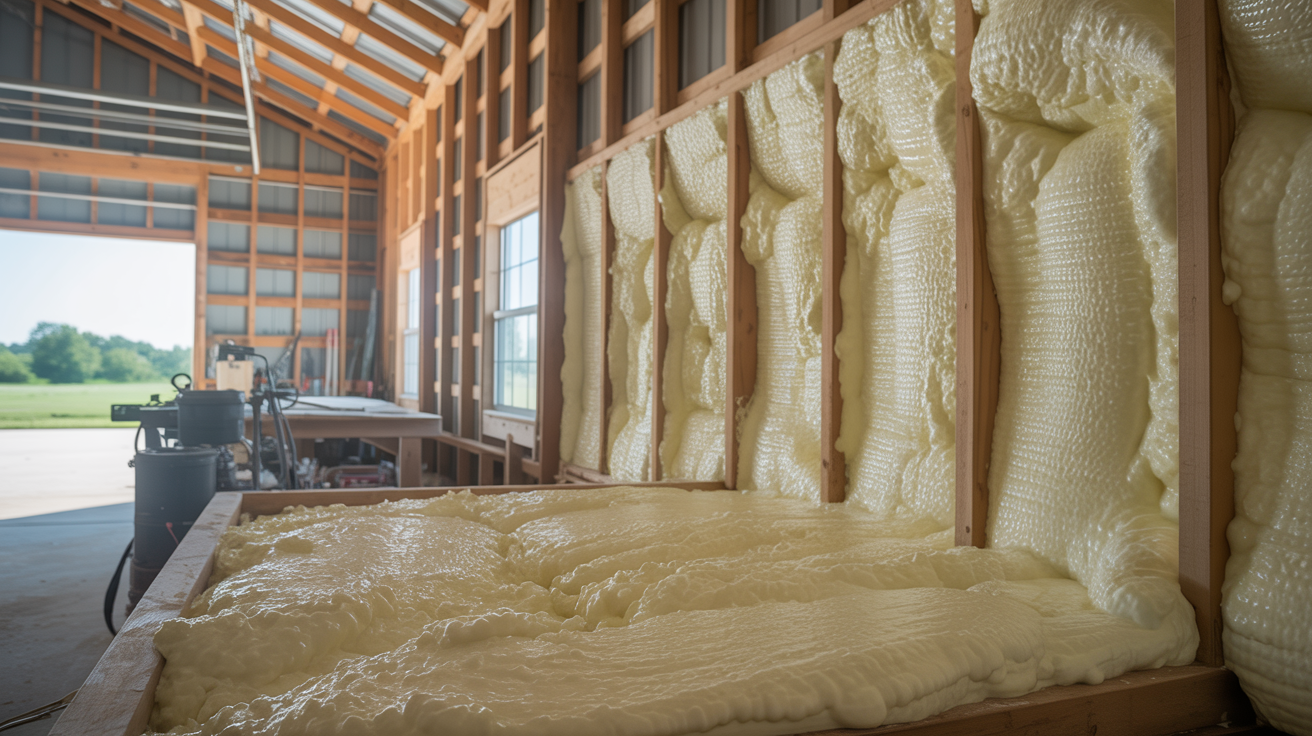
Pole barns, workshops, and outbuildings serve a wide range of purposes across Missouri—from equipment storage and livestock housing to woodworking shops and recreational spaces. These structures face unique environmental challenges that standard insulation often fails to address. Missouri's temperature swings, high humidity levels, and seasonal extremes create conditions where condensation, air leakage, and thermal inconsistency become serious problems. For owners looking to protect their investments and create functional, comfortable spaces, spray foam insulation offers solutions that traditional materials simply cannot match.
The Unique Challenge of Insulating Metal Buildings
Most pole barns and outbuildings rely on metal siding and roofing, which creates a distinct insulation challenge. Metal is an excellent conductor of heat, meaning it rapidly transfers exterior temperatures directly into the interior space. On a hot summer day in Springfield, an uninsulated metal workshop can easily reach temperatures exceeding 110 degrees. During winter, that same building becomes a cold, drafty environment where moisture condenses on every surface.
Traditional insulation materials like fiberglass batts were designed primarily for wood-framed residential structures. When installed in metal buildings, they often fail to prevent air movement, allow condensation to form between the insulation and metal surfaces, and compress over time due to moisture absorption. The result is a building that remains uncomfortable, develops rust and corrosion problems, and requires frequent maintenance to address ongoing moisture damage.
Spray foam insulation eliminates these problems by adhering directly to metal surfaces and creating a seamless thermal barrier. Closed-cell spray foam, in particular, forms a moisture-resistant layer that prevents condensation from ever reaching the metal. This single characteristic alone extends the lifespan of metal buildings significantly by protecting against rust, panel deterioration, and structural weakening caused by repeated freeze-thaw cycles.
Condensation Control: The Hidden Threat to Your Investment
Condensation is one of the most damaging—and often overlooked—issues affecting pole barns and workshops. When warm, humid air contacts cold metal surfaces, moisture forms instantly. This process occurs year-round in Missouri, though it intensifies during spring and fall when temperature differentials are greatest. Condensation doesn't just create puddles on the floor; it promotes mold growth, causes wood framing to rot, rusts metal fasteners and panels, and creates an environment where stored equipment deteriorates rapidly.
Many building owners attempt to manage condensation with ventilation alone, but this approach only addresses symptoms rather than the root cause. Ventilation can help reduce moisture levels, but it cannot prevent warm air from contacting cold surfaces. Spray foam insulation changes the equation entirely. By insulating the metal panels directly, spray foam keeps interior surfaces at a more consistent temperature. This eliminates the temperature differential that causes condensation in the first place.
For agricultural structures housing livestock or storing hay, condensation control becomes even more critical. Animals naturally produce moisture through respiration, and stored organic materials release humidity as they cure. Without proper insulation to prevent condensation, these moisture sources create persistent problems that compromise both animal health and stored feed quality. Spray foam provides the tight building envelope needed to maintain controlled interior conditions regardless of external weather patterns, as we've previously explained when discussing how spray foam handles Missouri's humid summers.
Energy Efficiency for Workshops and Heated Spaces
Many pole barn owners use their structures as workshops or hobby spaces, which means heating and cooling become important considerations. An uninsulated metal building is nearly impossible to heat or cool efficiently. Heat escapes almost as quickly as it's generated, and air conditioning fights a losing battle against radiant heat transfer through metal surfaces.
Spray foam transforms these spaces into functional, comfortable environments that can be climate-controlled at reasonable cost. The high R-value of spray foam—particularly closed-cell formulations—provides exceptional thermal resistance. More importantly, spray foam eliminates air leakage, which is responsible for up to 40% of energy loss in typical buildings. Traditional insulation allows air to move freely through gaps and seams, but spray foam expands to fill every crack, joint, and penetration. This creates an airtight envelope that keeps heated or cooled air where it belongs.
For workshop owners who spend long hours working on projects, this difference translates to consistent comfort and substantially lower utility costs. A properly insulated pole barn can maintain comfortable temperatures year-round without the energy consumption that would otherwise make climate control prohibitively expensive. The long-term savings from reduced energy consumption often justify the initial investment within just a few years, making spray foam a smart financial decision for structures that see regular use.
Durability That Matches Your Building's Lifespan
Pole barns and metal buildings are designed to last decades with minimal maintenance. The insulation protecting them should offer the same durability. Traditional insulation materials deteriorate relatively quickly in agricultural and workshop environments. Fiberglass batts absorb moisture, sag over time, compress under their own weight, and become nesting material for rodents and insects. Within ten to fifteen years, traditional insulation often requires replacement, disrupting operations and requiring significant reinvestment.
Spray foam insulation is engineered for exceptional longevity. Once cured, spray foam maintains its shape and performance indefinitely. It does not sag, settle, or compress. Moisture does not compromise its thermal performance. Rodents and insects cannot tunnel through it or use it for nesting material. For pole barn owners, this means insulation that lasts as long as the structure itself without degradation or loss of effectiveness.
Additionally, spray foam adds structural rigidity to metal buildings. When applied to metal panels and framing, closed-cell spray foam creates a composite structure that resists racking, reduces panel vibration in high winds, and adds meaningful strength to the building envelope. This characteristic provides value beyond just insulation—it enhances the structural integrity of the entire building. As discussed in our guide on spray foam durability, properly installed spray foam can perform effectively for fifty years or more without requiring replacement or supplemental insulation.
Versatility for Different Building Uses
One of spray foam's greatest advantages for outbuildings is its versatility. Not every pole barn or workshop serves the same purpose, and insulation needs vary accordingly. For cold storage buildings, spray foam maintains consistent cool temperatures. For heated workshops, it provides energy efficiency and comfort. For livestock housing, it manages humidity and prevents condensation while maintaining appropriate temperatures for animal health.
Spray foam can be applied at varying thicknesses to achieve different R-values depending on the building's intended use. Areas requiring higher thermal resistance—such as roofs exposed to direct summer sun—can receive thicker applications, while walls may need less material. This customization allows building owners to optimize performance based on actual needs rather than accepting one-size-fits-all solutions.
The installation process for spray foam in pole barns is relatively straightforward for experienced professionals. Professional installation typically takes just one to two days for most agricultural structures, minimizing disruption to operations. Once applied, spray foam cures quickly and the building can return to normal use within 24 hours. There's no need for extensive preparation, temporary relocation of equipment, or extended downtime.
Protecting Equipment and Stored Materials
Many pole barns house valuable equipment, machinery, or materials that suffer damage from temperature extremes and humidity fluctuations. Metal tools rust in humid environments. Electronics fail when exposed to condensation. Wood products warp and crack with repeated moisture cycling. Stored chemicals may degrade or separate when subjected to freeze-thaw conditions.
Spray foam insulation creates a stable interior environment that protects these assets. By eliminating condensation and moderating temperature swings, spray foam preserves equipment value and extends the usable life of stored materials. For commercial operations where equipment downtime represents lost income, this protection carries real financial value. The cost of replacing corroded tools, damaged inventory, or failed equipment often exceeds the cost of properly insulating the building in the first place.
Making Outbuildings Functional Year-Round
Without proper insulation, most pole barns and workshops sit unused during Missouri's hottest and coldest months. Summer heat makes these spaces unbearable, while winter cold renders them unusable without expensive temporary heating. Spray foam insulation transforms seasonal structures into year-round functional spaces. Workshop owners can pursue projects regardless of weather. Agricultural operations can maintain consistent conditions for livestock and stored crops throughout the year. Storage buildings protect valuable assets in all seasons rather than exposing them to damaging extremes.
This year-round functionality represents a substantial increase in the building's practical value. A pole barn that can be used twelve months of the year rather than six offers twice the utility for the same structural investment. For businesses relying on these spaces for operations, this extended usability directly impacts productivity and revenue potential.
The Right Choice for Missouri's Climate
Missouri's climate presents specific challenges that make spray foam particularly valuable for outbuildings. Temperature swings of forty degrees or more within a single day are common during spring and fall. Humidity levels fluctuate dramatically between seasons. Summer storms bring intense heat and moisture, while winter delivers ice, snow, and bitter cold. These conditions create the perfect storm for condensation, thermal stress, and insulation failure using traditional materials.
Spray foam insulation is specifically engineered to handle these demanding conditions. Its moisture resistance prevents the absorption problems that plague fiberglass and cellulose. Its air-sealing properties eliminate drafts and prevent humidity infiltration. Its structural characteristics maintain performance regardless of temperature cycling or seasonal stress. For Missouri pole barn owners, spray foam represents insulation technology matched to local climate realities.
Long-Term Value for Your Investment
Pole barns, workshops, and outbuildings represent significant investments. Protecting that investment with insulation that performs reliably for decades makes sound financial sense. While spray foam carries higher initial cost than traditional insulation, its superior performance, exceptional durability, and maintenance-free lifespan deliver compelling long-term value. The combination of energy savings, extended building life, equipment protection, and year-round usability creates returns that traditional insulation simply cannot match.
For building owners committed to maximizing the functionality and longevity of their agricultural and recreational structures, spray foam insulation provides the performance foundation needed to achieve those goals. It eliminates the moisture problems, temperature extremes, and air leakage issues that compromise both comfort and durability in metal buildings.
Creating Comfortable, Protected Spaces
Pole barns and outbuildings should serve their intended purposes effectively regardless of weather conditions. Spray foam insulation makes that possible by addressing the unique challenges these structures face. From condensation control and energy efficiency to durability and equipment protection, spray foam delivers comprehensive solutions that traditional insulation cannot provide. For Missouri building owners looking to transform their outbuildings into comfortable, functional, year-round spaces, spray foam represents the ideal insulation choice—one that protects investments, enhances usability, and performs reliably for decades to come.