
How Spray Foam Helps Maintain Comfort Near Entryways
Front doors, mudrooms, and transition spaces present unique comfort challenges that most insulation approaches fail to address. Understanding why these areas feel different from the rest of your home reveals practical solutions for year-round stability.
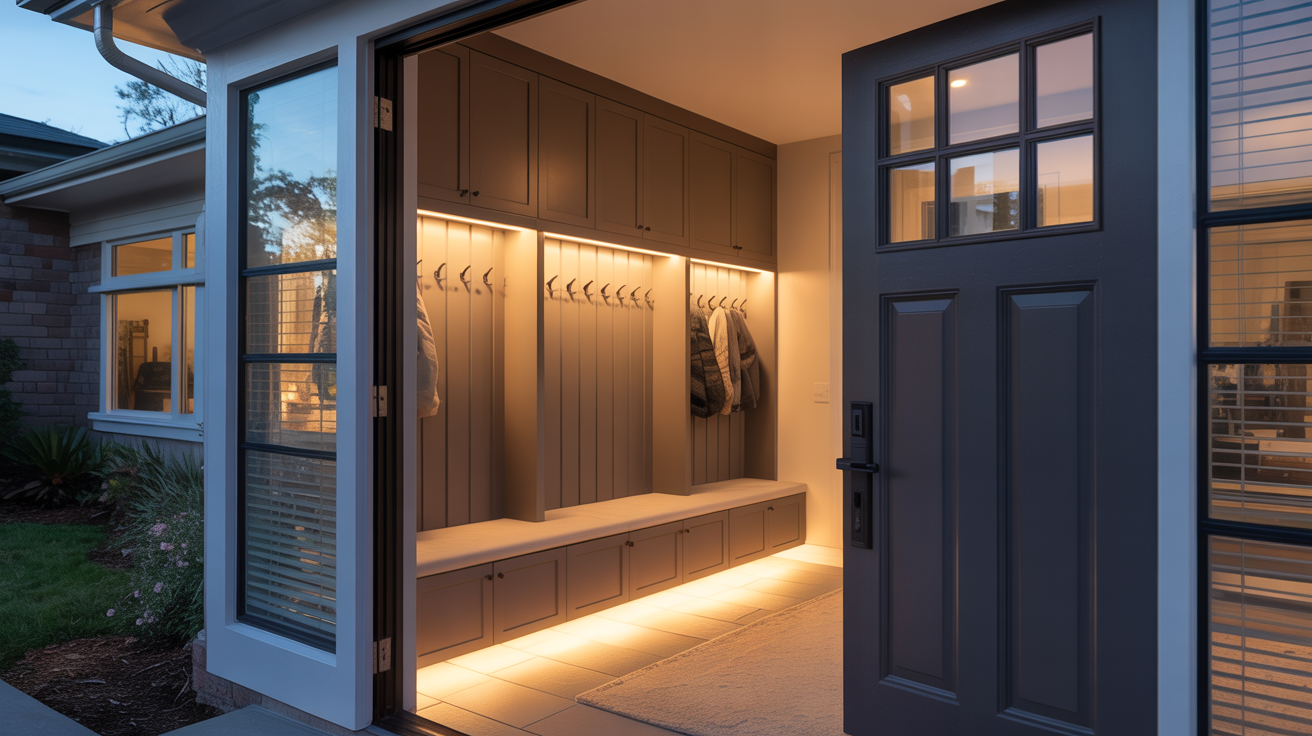
The front door opens and closes dozens of times each week. Each swing exchanges a volume of conditioned air for whatever temperature waits outside. Yet the discomfort homeowners experience near entryways extends far beyond these momentary exchanges. Something more fundamental creates the persistent drafts and temperature swings that make these spaces feel disconnected from the rest of the house.
Entry areas occupy a unique position in home construction. They bridge the controlled indoor environment with the unpredictable outdoors, serving as the primary breach point in an otherwise continuous building envelope. The architectural features that make entryways functional—doors, sidelights, transoms, and the framing that supports them—also create concentrated opportunities for thermal loss and air infiltration.
Where Drafts Actually Originate
Most homeowners assume entryway drafts come through the door itself. While weatherstripping and door seals certainly matter, the surrounding wall assembly often contributes far more to comfort problems than the door's visible gaps. The framing around door openings creates thermal bridges where heat transfers rapidly between inside and outside. Multiple structural members concentrate in these areas, and wood conducts heat roughly four times faster than standard insulation materials.
The rough opening around a door frame rarely receives adequate attention during construction. Installers focus on getting the door plumb and secure, often leaving gaps between the door frame and the structural framing inadequately sealed. Low-expansion foam around these gaps provides some improvement, but the wall cavities adjacent to the opening frequently contain compressed or missing insulation where framing complications made proper installation difficult.
Sidelights and transom windows compound these challenges. Each additional glass element requires its own framing, multiplying the thermal bridging effect while adding more junctions where air can find pathways through the assembly. The visual appeal of these design features comes with thermal costs that conventional insulation rarely addresses effectively.
Temperature Loss Through Repeated Use
Every time a door opens, conditioned air escapes while outdoor air rushes in to replace it. This exchange happens quickly—within seconds of the door swinging wide. But the thermal impact extends beyond this brief moment of direct air exchange.
Opening a door creates pressure changes throughout the home. The sudden connection between indoor and outdoor environments allows air to move through pathways that remain dormant when the house stays sealed. Wall cavities, ceiling penetrations, and gaps around other windows and doors all respond to these pressure fluctuations. A front door opening can actually draw outdoor air into the home through distant penetrations connected by hidden air pathways within the building assembly.
Mudrooms and vestibules exist partly to buffer these effects. The concept involves creating an airlock—a space that absorbs the thermal shock of door openings before it reaches the primary living areas. However, these transition spaces only function as intended when their own envelope performs well. A poorly insulated mudroom simply relocates the discomfort rather than eliminating it.
As we've discussed in our article about Missouri's climate challenges, the temperature extremes common to this region amplify every weakness in the building envelope. Entryways feel these extremes most acutely because they face direct exposure to outdoor conditions.
Why Conventional Approaches Fall Short
Standard fiberglass batts struggle in the confined and irregular spaces around door openings. The multiple framing members, hardware blocking, and sheathing returns create geometries that resist the rectangular shapes batts provide. Installers cut and compress material to fit, inevitably leaving gaps that allow air movement through and around the intended insulation.
The junction between wall and floor at entryways presents particular challenges. This area typically involves the intersection of multiple building assemblies—exterior wall, floor system, and often a porch or stoop structure. The complexity creates numerous pathways for air infiltration that batt insulation cannot address. Cold air entering at floor level makes entryways feel drafty even when walls seem adequately insulated.
Above the door, where headers span the opening to support loads, similar complications arise. Headers create large thermal bridges, and the space around them often receives minimal insulation attention during construction. Heat escaping through this overhead path contributes to the uncomfortable conditions many homeowners experience near their front doors.
Creating Continuous Protection
Spray foam insulation addresses entryway challenges through characteristics that match the demands of these complex assemblies. The material expands to fill irregular cavities completely, conforming to framing geometry rather than requiring the geometry to accommodate it. Around door openings, this means continuous coverage that eliminates the gaps and compressions that undermine conventional insulation.
The air sealing properties of spray foam prove equally valuable in entryway applications. By creating a continuous barrier that blocks air movement, spray foam prevents the infiltration pathways that make these areas feel drafty regardless of insulation thickness. The junction between wall and floor, the perimeter around door frames, and the spaces around headers all receive treatment that addresses both thermal resistance and air barrier continuity.
Applied to the walls surrounding an entryway, spray foam stabilizes temperatures in ways that make the space feel genuinely connected to the rest of the home. The area no longer functions as a thermal buffer zone constantly fighting outdoor conditions. Instead, it maintains the same comfortable temperatures found in interior rooms, regardless of how frequently the door opens and closes.
You can learn more about how professional application ensures complete coverage in our guide on the installation process. The attention to detail that trained installers bring proves particularly important in the challenging geometry around entryways.
Mudroom and Transition Space Improvements
Mudrooms that actually function as intended require envelope performance matching or exceeding the rest of the home. When these spaces suffer from poor insulation and air sealing, they fail their fundamental purpose. Occupants rush through rather than using them as intended, defeating the airlock concept entirely.
Properly insulated mudrooms become genuinely useful spaces. Comfortable temperatures encourage using these areas for their designed functions—removing outerwear, storing outdoor gear, managing the transition between outside activities and indoor living. The space transforms from a drafty passageway into an extension of comfortable living area.
Exterior walls in mudrooms benefit from spray foam's ability to handle the moisture conditions common in these spaces. Wet boots, dripping umbrellas, and snow-covered jackets all introduce moisture that can compromise conventional insulation over time. Closed-cell spray foam resists moisture intrusion while maintaining its insulating properties even in these demanding conditions.
As detailed in our article about spray foam durability, the material maintains its performance characteristics for decades without degradation. This longevity matters particularly in high-use areas like entryways where conditions would accelerate deterioration in less robust materials.
Energy Implications Beyond Comfort
The thermal losses concentrated at entryways affect whole-house energy consumption more significantly than their relatively small square footage might suggest. These areas often represent the weakest links in an otherwise reasonably performing envelope. Addressing entryway deficiencies can improve overall efficiency substantially.
HVAC systems respond to the conditions at the thermostat, which typically sits in a central location away from entryways. When entry areas lose heat rapidly, the system may satisfy the thermostat while leaving these peripheral zones uncomfortably cold. Occupants compensate by raising setpoints, increasing energy consumption throughout the house to address problems concentrated in specific areas.
Sealing and insulating entryways properly allows more efficient system operation. The thermostat setting that maintains comfort in living areas also provides adequate conditions near entries. This balanced performance translates directly to reduced energy consumption and more predictable utility costs.
The investment perspective on entryway improvements aligns with broader home performance upgrades. As explained in our discussion of spray foam as a long-term investment, addressing fundamental envelope deficiencies provides returns that compound over years of reduced energy costs and improved comfort.
Practical Comfort Gains
The difference proper entryway insulation makes becomes most apparent during temperature extremes. On the coldest winter mornings, adequately insulated entries feel merely cool rather than painfully cold. During summer heat waves, these spaces don't become uncomfortable transition points that make entering the home an unpleasant experience.
Guests notice the improvement immediately. The first impression of a home often forms in the entryway, and a space that feels comfortable and well-maintained creates positive associations. Beyond the aesthetic considerations, functional comfort in these high-traffic areas contributes to daily quality of life in ways that accumulate over thousands of entries and exits.
The areas around entryways deserve the same attention to performance that other parts of the building envelope receive. When these transition zones function properly—maintaining stable temperatures, blocking drafts, and serving their intended purposes—the entire home benefits from improved comfort, reduced energy consumption, and living spaces that perform consistently regardless of what conditions exist on the other side of the door.