
Spray Foam vs Fiberglass: Total Cost Over 20 Years for a Missouri Home
Comparing spray foam insulation vs fiberglass insulation cost over 20 years in Missouri — energy savings, lifespan, and total cost of ownership.
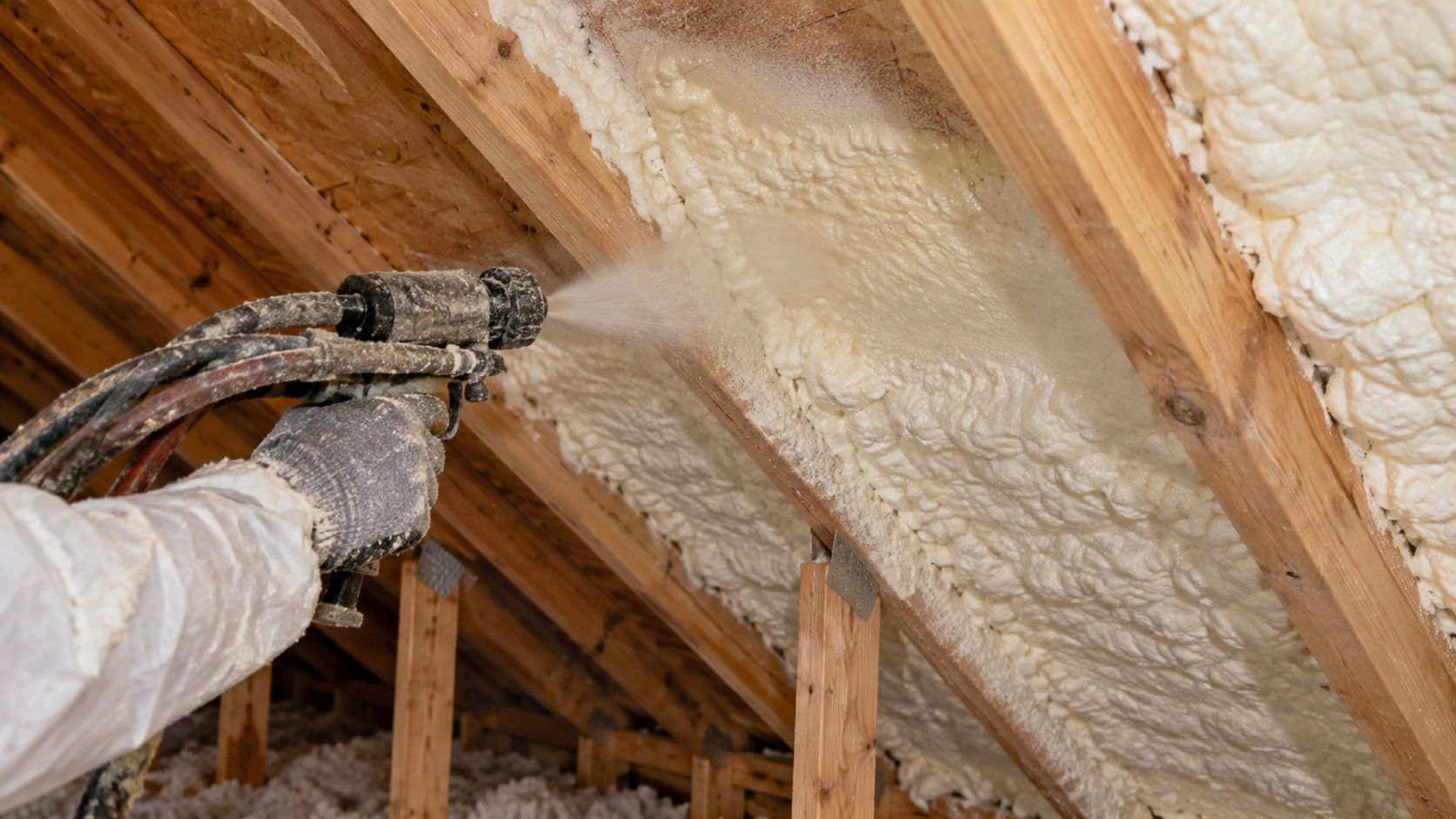
Spray Foam vs Fiberglass: Total Cost Over 20 Years for a Missouri Home
When Missouri homeowners ask us about spray foam insulation vs fiberglass insulation cost, the honest answer is that the upfront price difference is real — but it tells only part of the story. Over a 20-year window, the total cost of ownership often shifts significantly in favor of spray foam once you factor in energy savings, performance degradation, and replacement cycles.
Why the Upfront Numbers Look So Different
Fiberglass batt insulation is the cheaper option to install. In Missouri, professionally installed fiberglass typically runs between $0.44 and $1.28 per square foot, while spray foam ranges from $1.35 to $3.10 per square foot depending on the type and application area. (Source: myprojectcost.com)
For a 1,500-square-foot attic, that gap can mean $2,000–$4,000 more out of pocket on day one. We understand that number gives homeowners pause. But the 20-year picture looks different.
What Happens to Fiberglass Over Time
Fiberglass does not hold its rated R-value indefinitely. In Missouri's climate — hot, humid summers and cold winters — fiberglass batts are vulnerable to moisture absorption, compression, and settling. Studies show fiberglass can lose 20–50% of its thermal resistance within 10–20 years if it absorbs moisture or compresses under its own weight. (Source: insulationcentennial.com)
That means a home insulated with fiberglass in 2026 may need a top-up or full replacement by the mid-2030s to maintain code-level performance. That replacement carries its own labor and material cost — often $1,500–$3,500 for a typical attic — on top of the original installation.
Spray foam, by contrast, bonds permanently to the structure. Closed-cell foam does not sag, settle, or absorb moisture. It maintains its initial R-value for the life of the building — typically 40–50 years or more. (Source: dmvfoam.com)
The Energy Savings Gap
The bigger driver of 20-year cost is monthly energy bills. Fiberglass batts insulate against heat transfer but do not seal air gaps. Air leakage accounts for a substantial share of home energy loss — and fiberglass does nothing to stop it.
Spray foam acts as both insulation and an air barrier. We install it in attics, crawl spaces, rim joists, and wall cavities where air infiltration is the primary problem. Homeowners who switch from fiberglass to spray foam commonly see energy bills drop by up to 40%.
Over 20 years, even a modest $80-per-month reduction in heating and cooling costs adds up to $19,200 in savings. That more than covers the upfront premium in most Missouri homes.
Comparing the Two Options Side by Side
Spray Foam
Upfront cost: Higher ($1.35–$3.10/sq ft installed in Missouri)
Lifespan: 40–50+ years with no performance loss
Air sealing: Yes — acts as both insulator and air barrier
Moisture resistance: Closed-cell foam is water-impermeable
Replacement needed in 20 years: No
Estimated 20-year energy savings vs fiberglass: Significant — up to 40% reduction in HVAC costs
Fiberglass Batt
Upfront cost: Lower ($0.44–$1.28/sq ft installed in Missouri)
Lifespan: Effective performance often degrades within 10–20 years
Air sealing: No — air-permeable, does not stop infiltration
Moisture resistance: Absorbs moisture, loses R-value when wet
Replacement needed in 20 years: Likely — top-up or full replacement common
Estimated 20-year energy savings vs spray foam: Lower — air leakage continues unchecked
Where Spray Foam Wins Most Clearly
Not every application is the same. Spray foam delivers the strongest 20-year ROI in these situations:
Attics with complex framing or cathedral ceilings where air sealing is critical. Crawl spaces in Missouri homes where ground moisture is a constant threat. Rim joists and band joists where fiberglass batts fall out or compress over time. Metal buildings, pole barns, and shops where condensation control matters as much as thermal resistance.
For a straightforward open attic with simple framing and no moisture issues, the break-even point for spray foam can stretch to 8–12 years. (Source: usecalcpro.com) For problem areas, the payback is often faster.
Federal Tax Credits That Change the Math
The federal Energy Efficient Home Improvement Credit allows homeowners to claim 30% of qualifying insulation costs, up to $1,200 per year, through 2032. (Source: energy.gov) On a $4,000 spray foam job, that is $1,200 back at tax time — which meaningfully closes the gap with fiberglass on day one.
We recommend homeowners check with their tax preparer to confirm eligibility for their specific project.
The Hidden Cost of Air Leakage
One number that rarely appears in fiberglass vs spray foam comparisons is the cost of air leakage. The U.S. Department of Energy estimates that air infiltration accounts for 25–40% of heating and cooling energy loss in a typical home. Fiberglass batts do not address this at all — they sit in the cavity and slow heat transfer, but air moves right through the gaps around them.
Spray foam expands to fill every gap, crack, and penetration it contacts. That air-sealing function is what drives the energy savings gap between the two materials. In Missouri, where summer humidity and winter cold both put heavy demand on HVAC systems, that gap translates directly to dollars on your utility bill every month for 20 years.
What We See in Missouri Homes
We install spray foam across Springfield, Nixa, Ozark, Republic, Battlefield, Rogersville, Willard, and Marshfield. The homes we see most often have fiberglass that was installed 15–20 years ago and is now compressed, moisture-damaged, or simply not performing. The homeowners are paying for it every month in higher utility bills — they just do not always connect the two.
When we pull out old fiberglass from a crawl space or attic and replace it with closed-cell spray foam, the difference in air tightness is immediate. Most residential jobs take 1–2 days. The energy savings start showing up in the first billing cycle.
Open-Cell vs Closed-Cell: Which Spray Foam for Missouri?
Not all spray foam is the same, and the type matters for your 20-year cost calculation.
Closed-cell spray foam is denser, provides a higher R-value per inch (around R-6 to R-7), and acts as a Class II vapor retarder — meaning it slows moisture movement through the assembly. It is the right choice for crawl spaces, exterior walls, and any area where moisture is a concern.
Open-cell spray foam is softer, less dense, and provides a lower R-value per inch (around R-3.5 to R-4). It is better suited for interior applications like attic decking where vapor control is handled elsewhere. It costs less per square foot than closed-cell.
Both types outperform fiberglass on air sealing. The choice between them depends on where in your home the insulation is going and what moisture conditions it will face.
FAQ
Is spray foam always worth the extra cost over fiberglass?
Not always — it depends on the application. For attics with simple framing and no moisture issues, the break-even can take 8–12 years. For crawl spaces, rim joists, metal buildings, and any area with air infiltration problems, spray foam typically pays for itself faster and eliminates the need for future replacement.
Does fiberglass really need to be replaced after 20 years?
Not always, but performance degradation is common. Fiberglass that has been exposed to Missouri humidity, compressed by foot traffic, or installed with gaps can lose 20–50% of its rated R-value over time. If your home was insulated with fiberglass more than 15 years ago, an energy audit or inspection is worth doing before assuming it is still performing as rated.
Can I get a tax credit for spray foam insulation in Missouri?
Yes. The federal Energy Efficient Home Improvement Credit covers 30% of qualifying insulation costs up to $1,200 per year through 2032. Missouri does not currently offer a separate state-level insulation rebate, but Ameren Missouri and Spire occasionally run rebate programs — check their current offerings when you are planning your project.
Bottom line: Fiberglass costs less on day one, but spray foam insulation vs fiberglass insulation cost over 20 years often favors foam once you account for energy savings, performance retention, and avoided replacement costs.
If you want to know what the numbers look like for your specific home, request a free estimate and we will walk you through the comparison. You can also read more about how long spray foam insulation lasts in Missouri homes to understand the full lifecycle picture.