
Spray Foam Problems We Get Called to Fix, and What Caused Them
We fix spray foam insulation problems across Springfield and the Ozarks — here are the most common causes and what remediation actually looks like on site.
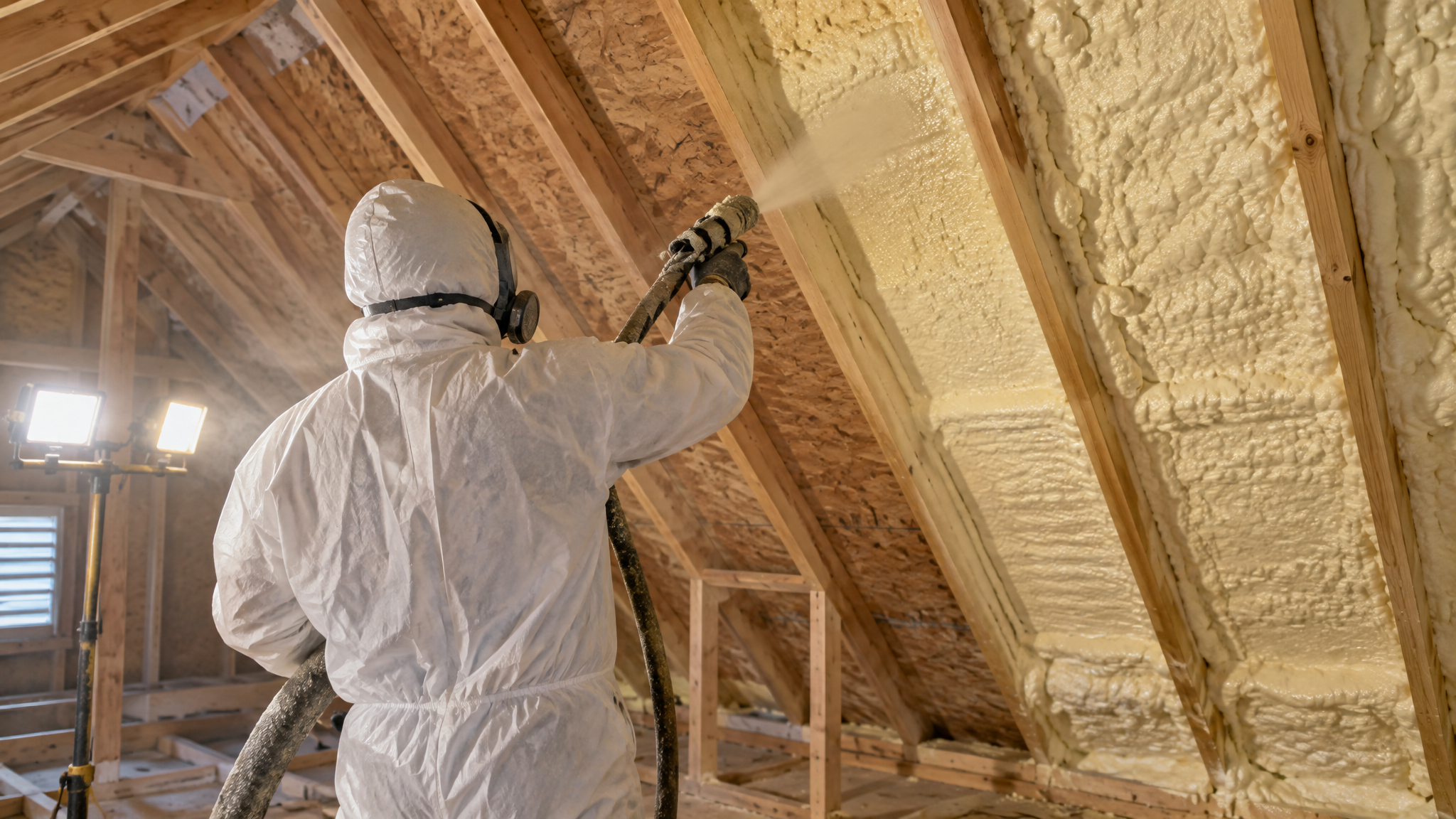
Spray Foam Problems We Get Called to Fix, and What Caused Them
When a spray foam insulation problem shows up — shrinkage, odor, gaps, or foam that never hardened right — it almost always traces back to how the job was done, not the material itself. We get called in regularly across Springfield, Marshfield, Nixa, and the surrounding area to assess and fix spray foam that was installed incorrectly, and the patterns are consistent.
The Most Common Spray Foam Insulation Problem We See: Off-Ratio Foam
Spray foam is a two-part chemical system. The "A" side (isocyanate) and the "B" side (polyol resin) must combine at a precise 1:1 ratio. When that ratio is off — even slightly — the foam does not cure correctly.
What A-side heavy foam looks like
The foam appears dark, amber, or streaky. It feels hard and brittle, almost like plastic. It may crack or crumble when touched. This happens when the isocyanate side dominates the mix, usually because of a blocked hose, a faulty proportioning pump, or chemicals stored outside the recommended 60–80°F temperature range.
What B-side heavy foam looks like
The foam stays soft, gummy, or tacky long after it should have cured. It may feel rubbery or spongy. This is the version homeowners notice most because the smell lingers — a sharp chemical or fishy odor that does not go away after the normal 24–72 hour cure window.
Both versions fail to perform. Off-ratio foam loses its R-value, loses its air-sealing ability, and in some cases releases chemical compounds into the living space. When we find it, the compromised section has to come out. There is no topical fix.
Shrinkage and Gaps: Why Foam Pulls Away from the Framing
Shrinkage is the second most common spray foam insulation problem we get called to assess. It shows up as cracks or visible separations between the foam and the studs, rafters, or sheathing it was sprayed against.
Small surface cracks are usually cosmetic. Gaps wider than about a quarter inch are a functional failure — they break the air seal and allow convection, which reduces the effective R-value of the entire assembly.
Cause: Wet substrate
Wood framing with a moisture content above 19% does not bond well with spray foam. The foam may appear to adhere during installation, but as the framing dries and moves, the foam pulls away. We see this most often in new construction where framing was exposed to rain before the roof was closed in, and in older homes where a slow leak had been wetting the framing for months before the homeowner noticed.
Cause: Lifts that were too thick
Closed-cell foam generates significant heat as it cures — this is the exothermic reaction that causes it to expand. When a contractor applies closed-cell foam in a single lift thicker than about 1.5 inches, the heat builds up in the center of the foam mass. The outer surface cures and hardens while the interior is still reacting. The result is foam that cracks, shrinks, or remains uncured in the middle. Proper installation requires multiple passes with time between them.
Cause: Temperature and humidity outside the spray window
Spray foam has a recommended application window — substrate temperature above 55°F, humidity within the manufacturer's specified range. Spraying outside those conditions prevents proper bonding. We have seen jobs done in late fall where the contractor rushed to beat the weather and the foam simply never adhered to the cold concrete or cold framing.
Persistent Odor After Installation
A mild chemical smell during and immediately after spray foam installation is normal. It should clear within 24–72 hours as the foam cures and the space is ventilated.
A smell that persists beyond two weeks — especially a sharp, fishy, or ammonia-like odor — is a sign of a failed installation. The most common causes are off-ratio mixing (described above), foam that was applied too thick and scorched in the center, or foam that reacted with a contaminated substrate such as oil-treated wood or a surface that had been treated with certain preservatives.
Topical sealers do not fix this. The failed foam has to be removed, the substrate cleaned and dried, and fresh foam applied correctly.
Moisture Trapped Behind the Foam
This one is less about the foam itself and more about product selection and pre-installation assessment. Open-cell foam is vapor-permeable — it allows moisture to pass through. In a Missouri crawl space or basement wall, that is usually the wrong choice. Closed-cell foam acts as a Class II vapor retarder and is the appropriate product for below-grade and high-humidity applications.
When an installer uses open-cell foam in a crawl space, or sprays over an existing moisture problem without addressing the source, the foam seals moisture against the framing. Wood rot and mold follow. We have opened crawl spaces where the framing looked fine from the outside of the foam but was actively rotting behind it.
The fix requires removing the foam, treating or replacing the damaged framing, correcting the moisture source, and reinstalling with the right product.
Thin Spots and Missed Areas
Thermal bridging happens when foam is applied unevenly — thin spots, gaps around penetrations like pipes and wires, or areas where the installer moved too quickly. These spots allow heat to transfer through the framing or sheathing, reducing the overall performance of the insulation system.
We find these most reliably with a thermal camera. A wall or attic that looks fully foamed from the inside can have cold spots that show up clearly on an infrared scan. When we find them, we fill them in — it is a straightforward repair as long as the original foam is sound.
What We Do When We Get the Call
When a homeowner contacts us about a spray foam insulation problem, we start with a visual inspection and, when needed, a thermal scan. We are looking for:
- Visible gaps or separation between foam and framing - Foam that is discolored, brittle, or still tacky - Persistent odor - Evidence of moisture behind or beneath the foam - Thin spots or missed areas around penetrations
If the foam is sound and the issue is cosmetic, we say so. If there is a functional failure, we remove only the compromised section — not the entire installation — correct the root cause, and reapply. Full tear-outs are rarely necessary.
We document everything before and after so the homeowner has a clear record of what was found and what was done.
FAQ
How do I know if my spray foam was installed correctly?
Look for foam that is uniform in color and texture, fully adhered to the framing with no visible gaps, and firm to the touch. There should be no persistent chemical odor after the first few days. If you are unsure, a thermal scan is the most reliable way to check for thin spots or missed areas without opening walls.
Can bad spray foam be repaired without removing everything?
In most cases, yes. We remove only the section that failed — back to a clean, dry, sound substrate — correct whatever caused the failure, and reapply fresh foam. Full removal is only necessary when the failure is widespread or when the substrate itself has been damaged by moisture.
Is spray foam odor dangerous?
During the cure window (24–72 hours), the space should be ventilated and occupants should stay out. A smell that clears within a few days is normal. A persistent odor beyond two weeks indicates incomplete curing, which means the foam is still off-gassing uncured chemicals. That situation warrants a professional assessment — not just airing out the space.
Bottom line:
Most spray foam insulation problems are installation errors, not material failures — and most are repairable without a full tear-out.
If you have foam that is pulling away, smells wrong, or was installed by a contractor you are no longer confident in, we are happy to come out and give you an honest assessment. We serve Springfield, Nixa, Ozark, Republic, Battlefield, Rogersville, Willard, and Marshfield. Call us at 417-224-8734 or visit /free-estimate to get started.
For more on what can go wrong with insulation in Missouri homes, see our post on top insulation problems in Greene and Christian County homes. And if you want to understand what a proper installation looks like from start to finish, read what happens during a professional spray foam installation.