
Spray Foam Insulation Pros and Cons for Missouri Homes: An Installer's Honest List
Honest pros and cons of spray foam insulation from a Missouri installer — energy savings, moisture control, cost, and when it makes sense for your home.
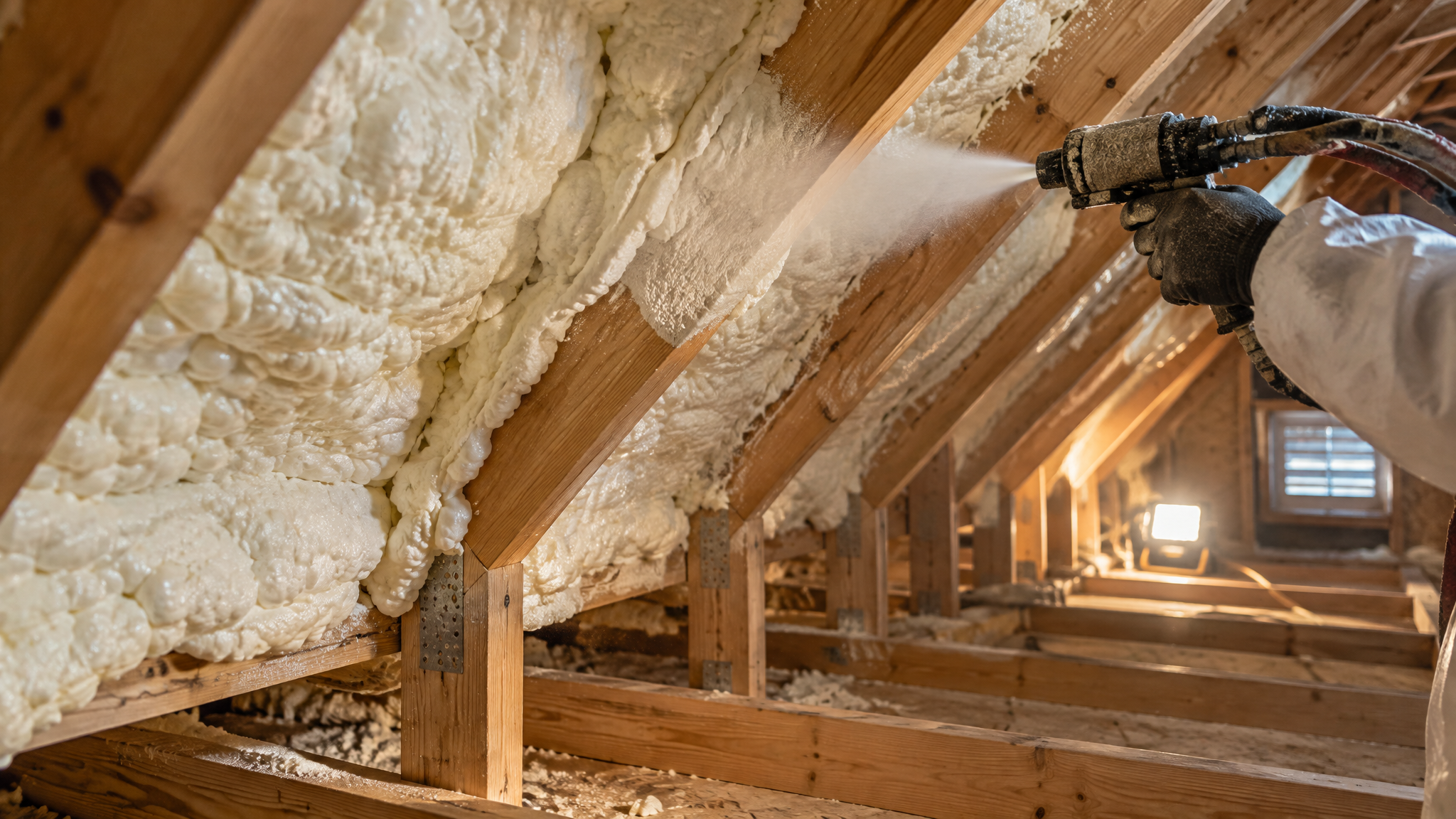
Spray Foam Insulation Pros and Cons for Missouri Homes: An Installer's Honest List
The pros and cons of spray foam insulation matter more in Missouri than almost anywhere else — our climate swings from brutal summer humidity to hard winter freezes, and the wrong insulation choice costs you money every month. We install spray foam across Greene, Christian, and Webster counties every week, and we want to give you the straight story before you decide.
Why Missouri Homeowners Ask About Spray Foam
Missouri sits in a mixed-humid climate zone where homes fight heat and moisture in summer and cold air infiltration all winter. Traditional fiberglass batts leave gaps at every joist, stud, and penetration. Spray foam expands to fill those gaps completely, which is why so many homeowners in Springfield, Nixa, Ozark, and Marshfield are asking about it.
But spray foam is not the right answer for every situation. Here is our honest breakdown.
The Pros of Spray Foam Insulation
Air Sealing and Thermal Performance
Spray foam is the only insulation that seals and insulates in one step. When we spray it into an attic, crawl space, or rim joist, it expands to fill every crack and gap. That airtight seal is what drives the energy savings — up to 40% reduction in heating and cooling costs compared to a home with no air sealing at all.
Moisture Control in Missouri's Humid Summers
Closed-cell spray foam is a Class II vapor retarder. That means it slows moisture movement through walls and floors, which matters enormously in a Missouri summer when outdoor humidity regularly tops 80%. In crawl spaces especially, closed-cell foam on the walls and rim joists keeps ground moisture from migrating into your floor system and subfloor.
Long Service Life
Properly installed spray foam does not sag, settle, or compress over time the way fiberglass batts do. We have seen 20-year-old spray foam installations that still perform like new. You install it once and it stays put.
Structural Reinforcement
Closed-cell foam adds measurable rigidity to wall assemblies and roof decks. In pole barns and metal buildings — a common application for us in Webster County — it also prevents condensation on metal surfaces that would otherwise rust the structure from the inside out.
Sound Dampening
Open-cell spray foam absorbs sound waves rather than reflecting them. Homeowners who add open-cell foam to interior walls between bedrooms or between a garage and living space notice a real difference in noise transmission.
The Cons of Spray Foam Insulation
Higher Upfront Cost
Spray foam costs more than fiberglass or blown-in cellulose. According to industry data, professional installation runs roughly $1.50–$3.00 per square foot for open-cell and $3.00–$6.00 per square foot for closed-cell foam. Source: coldcountrysprayfoam.com/blog/spray-foam-insulation-pros-and-cons The payback period is typically three to seven years depending on your current energy bills and the scope of the project.
Requires Professional Installation
Spray foam is a two-component chemical system. If the ratio of polyol resin to isocyanate is off, the foam can fail to cure properly, shrink away from surfaces, or off-gas for an extended period. This is not a DIY product for large areas. Hiring an experienced, properly equipped installer is not optional — it is the difference between a job that performs for decades and one that causes problems.
Off-Gassing During and After Installation
During the curing process, spray foam releases volatile organic compounds. We always advise homeowners to vacate the home for 24 hours after installation and to ventilate thoroughly before re-entry. Once fully cured — typically within 24 hours — the foam is inert and safe. But the curing window is real and should not be rushed.
Difficult to Remove
Spray foam bonds permanently to wood, concrete, and metal. If you ever need to access wiring or plumbing behind a foamed wall, the foam has to be cut or chiseled away. This is rarely a problem in practice, but it is worth knowing before you commit.
Tighter Envelope Requires Ventilation Planning
A well-sealed home needs controlled fresh air. When we foam an attic or crawl space, we talk with homeowners about whether their HVAC system provides adequate fresh air exchange. In some cases, an energy recovery ventilator (ERV) is the right addition. Spray foam without proper ventilation planning can trap indoor pollutants.
Open-Cell vs. Closed-Cell: Which Is Right for Your Missouri Home?
This is the most common question we get. Here is how we think about it:
Open-Cell Spray Foam
Best for: Interior walls, attic decks (when a conditioned attic is the goal), sound control between rooms.
Characteristics: Softer, more flexible, lower cost per square foot, vapor-permeable (not a moisture barrier), excellent sound absorption.
Not ideal for: Crawl spaces, exterior walls in flood-prone areas, or anywhere moisture resistance is the primary goal.
Closed-Cell Spray Foam
Best for: Crawl spaces, rim joists, exterior walls, metal buildings, pole barns, rooflines.
Characteristics: Dense, rigid, Class II vapor retarder, higher R-value per inch, adds structural strength.
Not ideal for: Budget-sensitive interior applications where moisture is not a concern.
For most Missouri homes, we use closed-cell in the crawl space and rim joists, and open-cell in the attic deck or interior walls depending on the homeowner's goals. See our full comparison in open-cell vs. closed-cell spray foam for Missouri homes.
Where Spray Foam Makes the Most Sense in a Missouri Home
The highest-return applications we see in our service area:
Crawl spaces: Encapsulating a vented crawl space with closed-cell foam on the walls and rim joists eliminates the single biggest source of moisture and cold-air infiltration in most older Missouri homes. Crawl space encapsulation typically runs $2,500–$8,000 depending on size and condition.
Attic air sealing: Even if you keep blown-in insulation on the attic floor, spray-foaming the penetrations, top plates, and eave baffles before adding insulation dramatically reduces air leakage.
Rim joists: The band of framing at the top of your foundation wall is almost always uninsulated and full of gaps. Closed-cell foam here is one of the highest-ROI improvements in an older home.
Metal buildings and pole barns: Condensation on metal roofing and walls is a serious problem in Missouri's humid summers. Closed-cell foam applied directly to the metal eliminates the dew point problem entirely.
Frequently Asked Questions
How long does spray foam insulation last in a Missouri home?
Properly installed spray foam has an indefinite service life under normal conditions. It does not settle, compress, or degrade the way fiberglass batts do. We have inspected installations that are 15 to 20 years old and still performing as designed. The main risk to longevity is UV exposure — spray foam should always be covered or painted if it will be exposed to sunlight.
Will spray foam insulation cause mold problems?
Closed-cell spray foam actually reduces mold risk in crawl spaces and exterior walls by blocking the moisture movement that mold needs to grow. Open-cell foam is vapor-permeable, so it should not be used in locations where bulk water or high sustained humidity is present. When we assess a home, we look at the moisture conditions first and recommend the right product for the location.
Is spray foam worth the extra cost compared to fiberglass?
For most Missouri homeowners who plan to stay in their home for five or more years, yes. The combination of air sealing and insulation in one step delivers energy savings that fiberglass batts alone cannot match, because batts do not seal air leaks. The payback period depends on your current energy bills, the size of the project, and how leaky your home is today. We can walk you through the numbers during a free estimate.
Bottom line:
Spray foam insulation delivers real performance advantages in Missouri's climate — especially for crawl spaces, rim joists, and metal buildings — but it costs more upfront and requires a skilled installer. When the job is done right, most homeowners see the payback within a few years and enjoy a more comfortable, durable home for decades.
Ready to find out if spray foam makes sense for your home? Request a free estimate and we will assess your specific situation in Springfield, Nixa, Ozark, Republic, Battlefield, Rogersville, Willard, or Marshfield.