
How to Read a Spray Foam Quote: Board Feet, Thickness, and What Should Be Itemized
Learn how to read a spray foam insulation quote: what board feet mean, why thickness matters, and every line item that should appear on your bid.
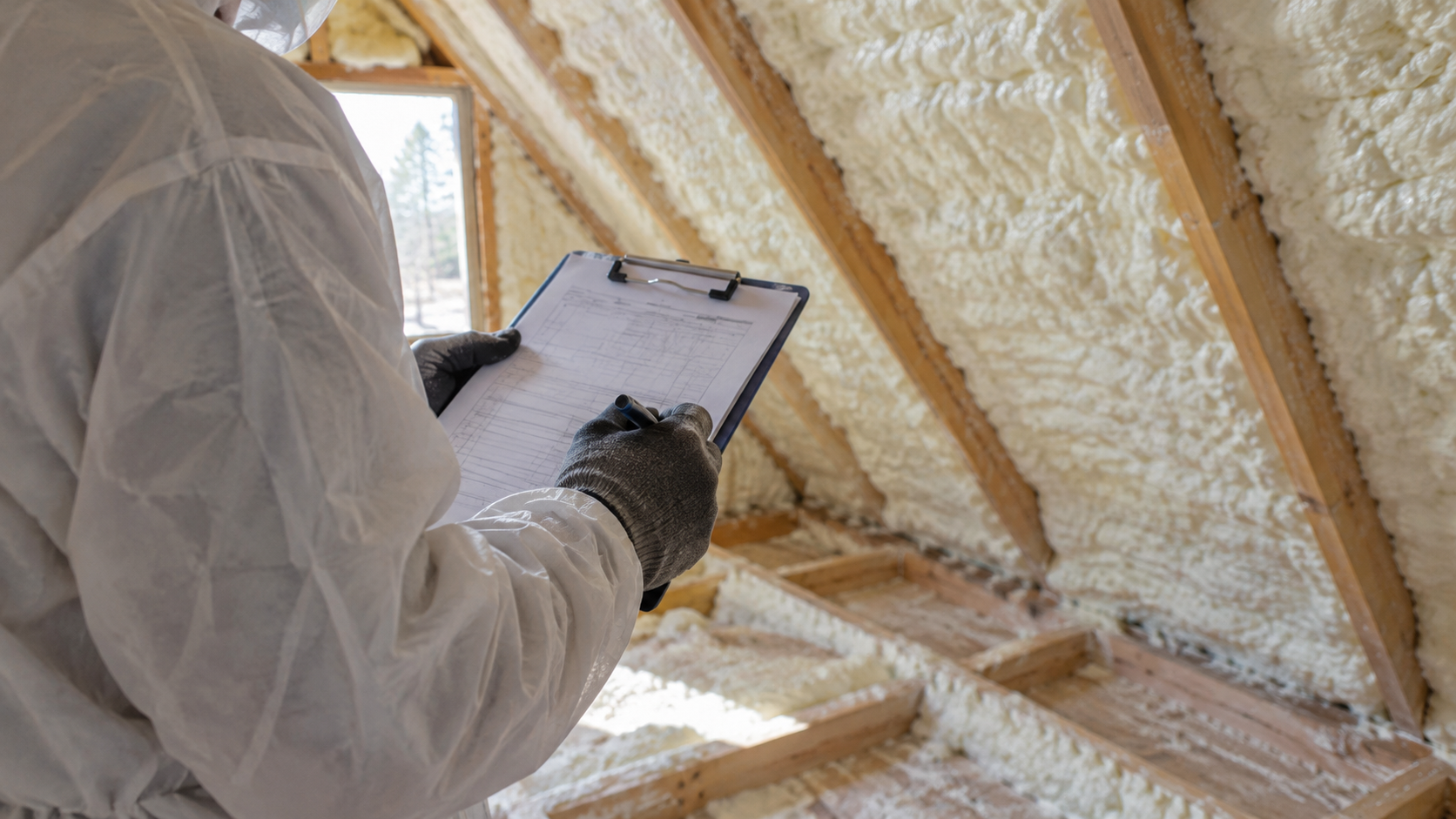
How to Read a Spray Foam Quote: Board Feet, Thickness, and What Should Be Itemized
A spray foam insulation quote can look confusing if you have never seen one before, but once you understand the unit of measure — the board foot — the numbers make complete sense. We put together this guide so homeowners across Springfield, Nixa, Ozark, and the surrounding area can walk into any estimate conversation knowing exactly what to look for in a spray foam insulation quote.
What Is a Board Foot and Why Does It Drive the Price?
A board foot is the standard unit of measurement in the spray foam industry. It represents one square foot of surface area sprayed to one inch of thickness. That single definition explains almost everything on your quote.
The formula is straightforward:
Surface area (sq ft) × Thickness (inches) = Board feet
So if we are insulating a 500-square-foot attic floor to 3 inches of open-cell foam, that job is 1,500 board feet. If the same attic gets 2 inches of closed-cell foam instead, it is 1,000 board feet — but closed-cell costs more per board foot, so the total price may be similar or higher depending on the product.
Any quote that does not show board footage is incomplete. You cannot compare two bids fairly without knowing how many board feet each contractor is proposing.
Open-Cell vs. Closed-Cell: What the Quote Should Specify
Every line item on a spray foam quote should identify the foam type. The two products behave differently and price differently.
Open-Cell foam
Open-cell foam is softer and vapor-permeable. It delivers roughly R-3.5 to R-3.7 per inch, so you need more thickness to hit a given R-value target. Installed cost typically runs between $0.48 and $1.60 per board foot depending on region and project size. It is a common choice for interior attic roof decks and interior walls where moisture drive is not a concern.
Closed-cell foam
Closed-cell foam is rigid and dense. It delivers roughly R-6.5 to R-7.0 per inch and acts as a Class II vapor retarder, which matters in Missouri crawl spaces and exterior walls. Installed cost typically runs between $1.15 and $3.10 per board foot. Because it achieves a higher R-value in less thickness, it is often the right call when you have limited cavity depth or need moisture control.
A quote that says only "spray foam" without specifying open-cell or closed-cell is not a complete quote. Ask the contractor to clarify before you sign anything.
What Thickness Should the Quote Specify?
Thickness drives the board footage, which drives the price. A quote that lists only a price per square foot — without specifying inches — is hiding information from you.
Here is why thickness matters so much in Missouri:
The International Energy Conservation Code sets minimum R-value requirements for our climate zone. For attic assemblies in Missouri, the target is R-49 for attic floors and R-38 for cathedral ceilings. To hit R-49 with open-cell foam at R-3.7 per inch, you need roughly 13 inches. To hit R-49 with closed-cell foam at R-6.5 per inch, you need roughly 7.5 inches. Those are very different board footage numbers, and a quote that skips the thickness detail leaves you unable to verify whether the proposed scope actually meets code.
We always specify foam type, target thickness in inches, and total board footage on every estimate we provide.
Line Items That Should Appear on Every Quote
A professional spray foam quote is itemized. Here is what to look for:
Foam material and installation
This is the core line: foam type, surface area, thickness in inches, total board footage, and price per board foot. This line should be broken out by zone if you are doing multiple areas — attic, crawl space, and rim joists are three separate scopes with different foam types and thicknesses.
Surface preparation and masking
Protecting electrical boxes, HVAC equipment, and finished surfaces takes time. Some contractors include this in the board-foot rate; others break it out. Either way, it should be accounted for somewhere.
Removal of existing insulation
If you have old fiberglass batts or blown cellulose that needs to come out before we spray, that is a separate labor cost. It should appear as its own line, not buried in the foam price.
Ignition or thermal barrier
Spray foam in an occupied space often requires a code-compliant ignition barrier — either an intumescent coating or a layer of drywall. If your project requires one, it should be itemized. If a quote omits this and your inspector requires it later, you will pay for it out of pocket.
Mobilization or minimum job fee
Spray foam contractors bring a heated rig, specialized hoses, and a trained crew to every job. Most have a minimum charge to cover that mobilization cost, often ranging from $1,000 to $2,000. If your project is small, this minimum may be the controlling cost rather than the board-foot rate. A transparent quote shows it as a line item.
How to Compare Two Quotes Side by Side
When you have two bids in hand, do not compare the bottom-line number first. Compare the scope first.
Scope check
Are both contractors proposing the same surfaces? One bid may include rim joists; the other may not. One may include the garage ceiling; the other may stop at the attic floor. Confirm the square footage and zones match before comparing prices.
Thickness check
Are both bids proposing the same thickness in inches? A bid for 2 inches of closed-cell and a bid for 3 inches of closed-cell are not the same job. The second bid will cost more and deliver a higher R-value. Neither is wrong — but you need to know which one you are buying.
Board footage check
Once scope and thickness match, the board footage numbers should be close. A large discrepancy in board footage for the same scope and thickness is a red flag — one contractor may be underbidding the material quantity.
Exclusions check
Read the exclusions section of each bid. If one contractor excludes ignition barrier and the other includes it, the apparent price difference may disappear once you add the missing item.
FAQ
What does "board feet" mean on my spray foam quote?
A board foot is one square foot of surface area sprayed to one inch of thickness. Your total board footage equals your surface area in square feet multiplied by the proposed thickness in inches. This is the unit contractors use to price spray foam jobs, so it should appear clearly on every quote you receive.
Is a lower price per board foot always better?
Not necessarily. A lower price per board foot may reflect a thinner application, a lower-quality foam product, or a contractor who has not accounted for all the work involved. Compare the full scope — foam type, thickness, board footage, and all line items — before deciding which quote represents the better value.
How do I know if the proposed thickness is enough?
Ask the contractor what R-value the proposed thickness will deliver, and compare that to the code minimum for your climate zone. For Missouri attic floors, the target is R-49. For exterior walls, it is R-20 or R-13 plus R-5 continuous. If the proposed thickness falls short, ask why — there may be a valid reason, or the contractor may be underbidding the scope.
Bottom line: a complete spray foam insulation quote shows foam type, thickness in inches, total board footage, price per board foot, and every ancillary cost as a separate line item. If any of those elements are missing, ask for them before you compare bids.
We are happy to walk you through our estimates line by line. Request a free estimate and we will show you exactly what you are getting — board feet, thickness, foam type, and all.
If you want to understand the full financial picture before you call anyone, our post on hidden costs of poor insulation covers what bad insulation actually costs you over time.