
How Spray Foam Insulation Affects HVAC Sizing in Missouri Homes
Learn how spray foam insulation reduces HVAC load calculations in Missouri homes, improving comfort, humidity control, and equipment efficiency year-round.
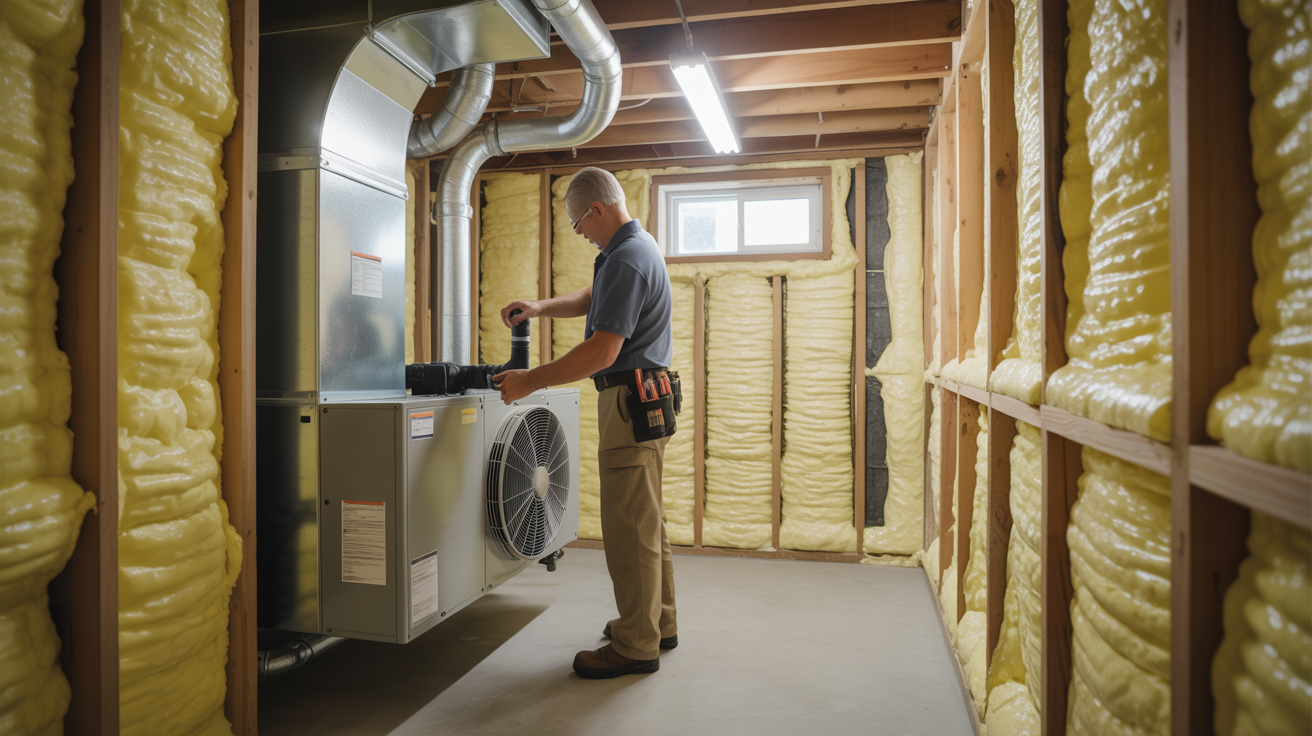
How Spray Foam Insulation Affects HVAC Sizing in Missouri Homes
If you've ever replaced an air conditioner or furnace in a Missouri home, you may have heard a contractor mention "Manual J" or "load calculations." These terms describe the engineering process used to determine how large your heating and cooling equipment should be. What most homeowners don't realize is that the insulation in their home—specifically whether it's spray foam or traditional fiberglass—has a profound effect on those calculations. Getting HVAC sizing right matters enormously in Southwest Missouri, where summer temperatures routinely climb into the mid-90s and winter cold snaps can drop well below freezing within the same season.
This article explains the relationship between spray foam insulation and HVAC sizing, why it matters for homeowners in Springfield, Nixa, Ozark, Republic, and Marshfield, and what questions to ask before your next equipment replacement.
What Is HVAC Sizing and Why Does It Matter?
HVAC sizing refers to the heating and cooling capacity of your equipment, measured in BTUs (British Thermal Units) for heating and tons for cooling. A system that is too large will short-cycle—turning on and off rapidly without completing a full conditioning cycle. Short-cycling wastes energy, creates uncomfortable humidity swings, and accelerates mechanical wear. A system that is too small will run continuously without ever reaching the set temperature on the hottest or coldest days.
Proper sizing is determined by a Manual J load calculation, which accounts for your home's square footage, ceiling height, window area, local climate data, and—critically—the thermal performance of your building envelope. That last factor is where insulation type makes a significant difference.
How a Tighter Envelope Changes the Load Calculation
Traditional fiberglass batt insulation slows heat transfer but does little to stop air movement. Air leakage is responsible for a substantial portion of a home's heating and cooling load. When conditioned air escapes through gaps around rim joists, electrical penetrations, attic hatches, and wall cavities, your HVAC system must work harder to compensate.
Spray foam insulation—particularly closed-cell spray foam—creates a continuous air barrier in addition to providing thermal resistance. When a home is properly air-sealed with spray foam, the infiltration load drops dramatically. This means the Manual J calculation yields a smaller required equipment capacity. In practice, homes insulated with spray foam often need HVAC systems that are one-half to a full ton smaller in cooling capacity than comparable homes with fiberglass insulation.
For Missouri homeowners, this has real financial implications. A smaller, correctly sized system costs less to purchase, less to operate, and tends to last longer because it runs in longer, more efficient cycles rather than short-cycling through the day.
If you're curious about how air leakage affects your home's overall comfort and energy use, understanding the hidden costs of poor insulation provides useful context on what inadequate air sealing actually costs over time.
The Humidity Factor in Southwest Missouri
Missouri's climate adds a layer of complexity that makes HVAC sizing even more consequential. Southwest Missouri summers are not just hot—they're humid. Relative humidity regularly exceeds 70 percent during June, July, and August, and the dew point often climbs high enough that outdoor air feels oppressive even in the shade.
An oversized air conditioner cools the air quickly but doesn't run long enough to remove adequate moisture. The result is a home that feels clammy and uncomfortable even when the thermostat reads 72 degrees. Homeowners in this situation often lower the thermostat further, driving up energy costs without actually solving the comfort problem.
A properly sized system in a well-sealed home runs longer cycles, which gives the evaporator coil time to condense and drain moisture effectively. Spray foam's air-sealing properties reduce the amount of humid outdoor air infiltrating the home in the first place, which means the system has less moisture to manage. This is why spray foam insulation is particularly well-suited to Missouri's humid summers—it addresses both the thermal and moisture dimensions of summer comfort simultaneously.
Spray Foam and Duct System Performance
HVAC sizing doesn't exist in isolation from the duct system. Even a correctly sized piece of equipment will underperform if the ducts leak conditioned air into unconditioned spaces like attics or crawl spaces. In Missouri homes, duct leakage is a common problem, particularly in older construction where ducts run through vented attics that reach 130 to 150 degrees Fahrenheit in summer.
When spray foam is applied to the underside of the roof deck in an attic, it converts the attic from a vented, unconditioned space to an unvented, semi-conditioned space. Ducts running through this space are no longer exposed to extreme temperature differentials, which dramatically reduces duct heat gain in summer and heat loss in winter. This improvement in duct system efficiency can further reduce the required HVAC capacity and improve overall system performance.
Homeowners considering attic spray foam should understand how this application differs from wall or crawl space insulation. Spray foam in finished attics addresses the specific challenges of roof-adjacent spaces and explains why the unvented attic assembly is increasingly preferred by building scientists.
What Happens When You Replace HVAC in an Already-Insulated Home?
Many Missouri homeowners upgrade their insulation before or after replacing HVAC equipment. The timing matters. If you insulate with spray foam first and then replace your HVAC system, your contractor can perform a new Manual J calculation that reflects the improved envelope. This often results in a smaller, less expensive system that performs better.
If you replace HVAC equipment first and insulate later, you may end up with an oversized system relative to your improved envelope. The system will still function, but you'll miss the opportunity to right-size the equipment and capture the full efficiency benefit of the insulation upgrade.
For homeowners in multi-story homes, the interaction between insulation and HVAC sizing is even more pronounced. Spray foam insulation in multi-story homes explains how air sealing between floors reduces the stack effect that drives temperature imbalances and increases equipment load.
Questions to Ask Before Your Next HVAC Replacement
Before signing a contract for new heating or cooling equipment, consider asking your contractor these questions:
Has a Manual J load calculation been performed for my specific home, or is the sizing based on square footage rules of thumb? Rules of thumb are notoriously inaccurate and frequently result in oversized equipment.
Does the calculation account for my current insulation type and air sealing level? If your home has spray foam insulation, this should be reflected in the inputs.
If I'm planning to upgrade insulation in the next year or two, should we factor that into the sizing decision now? A good contractor will help you think through the sequencing.
Has the duct system been tested for leakage, and does the load calculation account for duct losses? Duct leakage can add 20 to 30 percent to your effective load.
Practical Guidance for Missouri Homeowners
The relationship between insulation and HVAC sizing is one of the most underappreciated aspects of home performance. In Southwest Missouri's demanding climate—with its hot, humid summers, cold winters, and significant freeze-thaw cycling in spring and fall—getting both right is essential for year-round comfort and reasonable energy costs.
If your home has been insulated with spray foam, make sure any HVAC contractor you hire knows this before they size new equipment. Request a Manual J calculation in writing, and ask to see the inputs so you can verify that your insulation type and air sealing level are accurately represented.
If you're considering spray foam insulation and also anticipate replacing HVAC equipment in the next few years, talk to both your insulation contractor and your HVAC contractor together. Coordinating these upgrades can result in a smaller, better-performing system that costs less upfront and delivers lower operating costs for decades. Understanding what makes spray foam a long-term investment can help you frame this conversation with confidence.
The goal isn't simply to have good insulation or good equipment—it's to have a home where both work together as a system, delivering consistent comfort regardless of what Missouri's weather decides to do next.