
What a Springfield, MO Winter Does to an Under-Insulated Attic
Springfield MO winters expose every weakness in an under-insulated attic — ice dams, cold rooms, high bills. Attic insulation springfield mo is the fix.
What a Springfield, MO Winter Does to an Under-Insulated Attic
Attic insulation springfield mo is one of the most overlooked factors in home comfort, and every winter in southwest Missouri makes that gap painfully obvious. When your attic lacks adequate insulation, cold air pours in, heat escapes upward, and your heating system runs almost constantly trying to keep up.
Why Springfield Winters Hit Under-Insulated Attics Hard
Springfield sits in a climate zone where overnight lows regularly drop into the teens and twenties from December through February. That temperature swing puts enormous pressure on any attic that is not properly sealed and insulated. Warm air from your living space rises, finds the path of least resistance through your ceiling, and floods into the attic. From there it escapes through every gap in the roof deck, soffit, and ridge vent.
The result is not just a cold house. It is a house where your furnace runs in long, expensive cycles and still cannot keep the second floor comfortable.
The Most Common Signs We See in Springfield Homes
When we inspect attics in Springfield, Nixa, Ozark, and the surrounding area, we see the same problems over and over.
Cold floors on the second story
If the rooms above your garage or over a crawl space feel noticeably colder than the rest of the house, the attic above them is almost certainly under-insulated. Heat is escaping faster than your system can replace it.
Ice dams forming at the eaves
Ice dams are a direct symptom of a warm attic. When heat escapes through the ceiling and warms the underside of the roof deck, snow on the roof melts and runs toward the eaves. At the cold overhang, it refreezes into a ridge of ice. That ice dam traps water behind it, and that water eventually finds its way under your shingles and into your walls. Missouri Extension has documented this cycle in detail.
Condensation and moisture in the attic
When warm, humid air from your living space leaks into a cold attic, it condenses on the roof sheathing and rafters. Over time that moisture leads to mold, rot, and degraded insulation. We have opened attics in Rogersville and Willard where the original fiberglass batts were so saturated they had lost most of their insulating value.
Heating bills that keep climbing
If your gas or electric bill spikes every November and does not come back down until March, your attic is a likely culprit. Homes with properly insulated and air-sealed attics can see up to 40% in energy savings compared to homes with inadequate coverage.
What Spray Foam Does That Fiberglass Cannot
Traditional fiberglass batts and blown-in cellulose add thermal resistance, but they do not stop air movement. Air sealing and insulation are two separate jobs, and fiberglass handles only one of them.
Spray foam handles both in a single application.
Open-cell spray foam in the attic
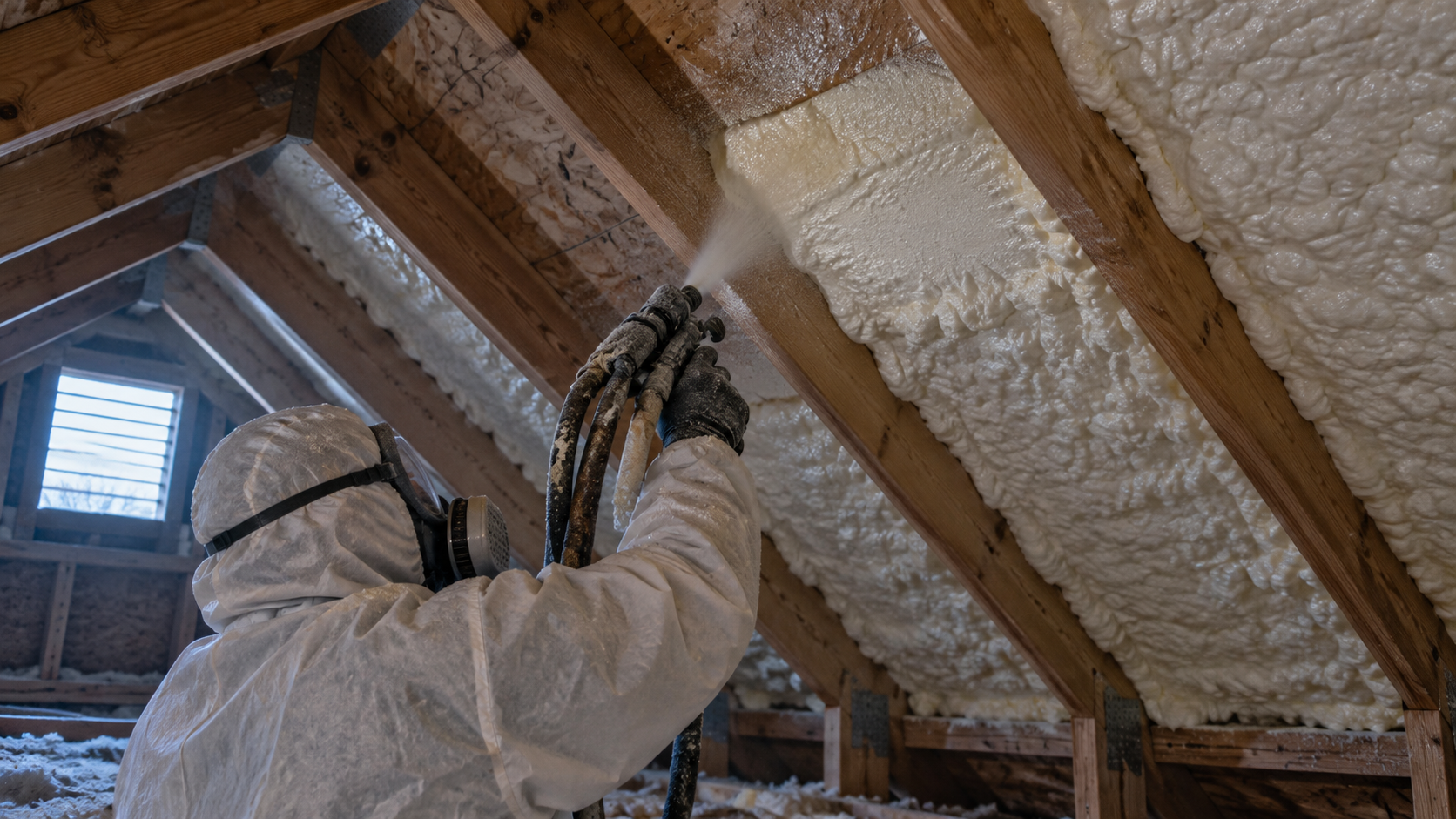
Open-cell foam expands to fill every gap, crack, and penetration in the attic floor or roof deck. It creates a continuous air barrier that fiberglass cannot match. Applied to the underside of the roof deck, it converts the attic into a conditioned space, which means your ductwork and HVAC equipment are no longer sitting in a space that swings between 10 and 130 degrees Fahrenheit.
Closed-cell spray foam for maximum R-value
Closed-cell foam delivers a higher R-value per inch and acts as a Class II vapor retarder, which is important in Missouri's mixed-humid climate. In tight attic spaces or cathedral ceilings where depth is limited, closed-cell foam lets us hit the thermal performance we need without sacrificing headroom.
Fiberglass batts (for comparison)
Fiberglass batts are inexpensive and widely available, but they allow air to move through and around them. In a leaky attic, adding more fiberglass without air sealing first is like adding a thicker blanket with holes in it. The Missouri Extension publication on attic insulation recommends air sealing before adding any insulation type.
What R-Value Does a Springfield Attic Need?
Missouri falls in DOE Climate Zone 4, and current recommendations call for attic insulation in the range of R-49 to R-60 for existing homes. Most of the homes we inspect in Springfield and the surrounding counties are sitting at R-19 or less — sometimes far less if the original insulation has settled or been disturbed.
We assess each attic individually. The right solution depends on whether you have a vented or unvented attic, the depth of your existing insulation, the condition of your air barrier, and whether your HVAC equipment is located in the attic space.
The Spray Foam Process in a Springfield Attic
Most residential attic jobs we complete in one to two days. Here is what the process looks like.
We start with a full attic inspection — checking for moisture damage, existing insulation depth, air leaks around penetrations, and the condition of the roof deck. We identify every gap: plumbing stacks, electrical chases, recessed light cans, the tops of interior walls, and the attic hatch.
We seal all penetrations before spraying. This step is critical. Spray foam applied over unsealed gaps is less effective than foam applied after a thorough air-sealing pass.
Then we spray. For a vented attic, we apply foam to the attic floor between and over the joists. For an unvented attic, we spray the underside of the roof deck from ridge to eave. The foam expands, cures, and creates a seamless thermal and air barrier.
We clean up and walk you through the finished attic before we leave.
When Is the Right Time to Insulate?
The best time to address attic insulation is before the first hard freeze, but we install year-round. Spray foam cures in any temperature we can safely work in, and the improvement is immediate — you will feel the difference in your first heating cycle after installation. If you are already in the middle of winter and dealing with cold rooms or high bills, do not wait until spring. Every month of delay is another month of excess heating costs.
FAQ
How do I know if my Springfield attic needs spray foam?
If you can see the tops of your floor joists above the insulation, your coverage is insufficient. Other signs include cold rooms on upper floors, ice dams in winter, high heating bills, and visible moisture or mold in the attic space. A free estimate visit from our team includes a full attic assessment.
Will spray foam in my attic stop ice dams?
Yes, in most cases. Ice dams form because heat escapes through the ceiling and warms the roof deck unevenly. When we air-seal and insulate the attic properly, the roof deck stays uniformly cold, snow melts evenly (or not at all), and the freeze-thaw cycle that creates ice dams is broken.
How long does attic spray foam last?
Spray foam is a permanent installation. It does not settle, sag, or lose R-value over time the way fiberglass batts can. Once it cures, it bonds to the substrate and stays there for the life of the structure.
Bottom line:
An under-insulated attic in Springfield is not just a comfort problem — it is a moisture problem, a structural problem, and a monthly expense that compounds every winter. Spray foam addresses all three in one installation.
If you are tired of high heating bills and cold rooms, contact us for a free estimate on attic insulation springfield mo. We serve Springfield, Nixa, Ozark, Republic, Battlefield, Rogersville, Willard, and Marshfield.
For more on how Missouri winters affect home insulation, see our post on winterizing your Missouri home with spray foam.