
Spray Foam Insulation in Ozark, MO: Newer Subdivisions, Same Attic Problems
Newer Ozark subdivisions still struggle with attic air leaks. We explain why ozark insulation often falls short and how spray foam closes the performance gap.
Spray Foam Insulation in Ozark, MO: Newer Subdivisions, Same Attic Problems
Ozark is one of the fastest-growing cities in southwest Missouri, and with that growth comes a wave of new homes — but newer construction does not automatically mean better ozark insulation. We install spray foam in brand-new subdivisions across Ozark every season, and the attic problems we find are remarkably consistent regardless of when the house was built.
Why New Homes in Ozark Still Have Attic Problems
Ozark has seen major residential expansion throughout the 2020s. Projects like the 229-acre Marabella development and Greenbridge Estates are adding hundreds of homes to the northeast side of the city. That growth is exciting for the community, but it also means a lot of attics insulated to minimum code — and minimum code is not the same as optimal performance.
Most new construction in the area uses blown-in fiberglass or cellulose to meet local building requirements. These materials do their job when installed correctly, but they share a critical weakness: they do not air-seal. Insulation without air sealing is like wearing a sweater with no wind protection. The R-value on the bag looks good, but conditioned air still escapes through every gap around plumbing penetrations, recessed lights, and HVAC chases.
We walk into attics in subdivisions that are two or three years old and find the same issues we see in homes built in the 1980s: bypasses around top plates, unsealed can lights, and ductwork sitting in unconditioned space. The house is new. The problem is not.
What Spray Foam Does Differently
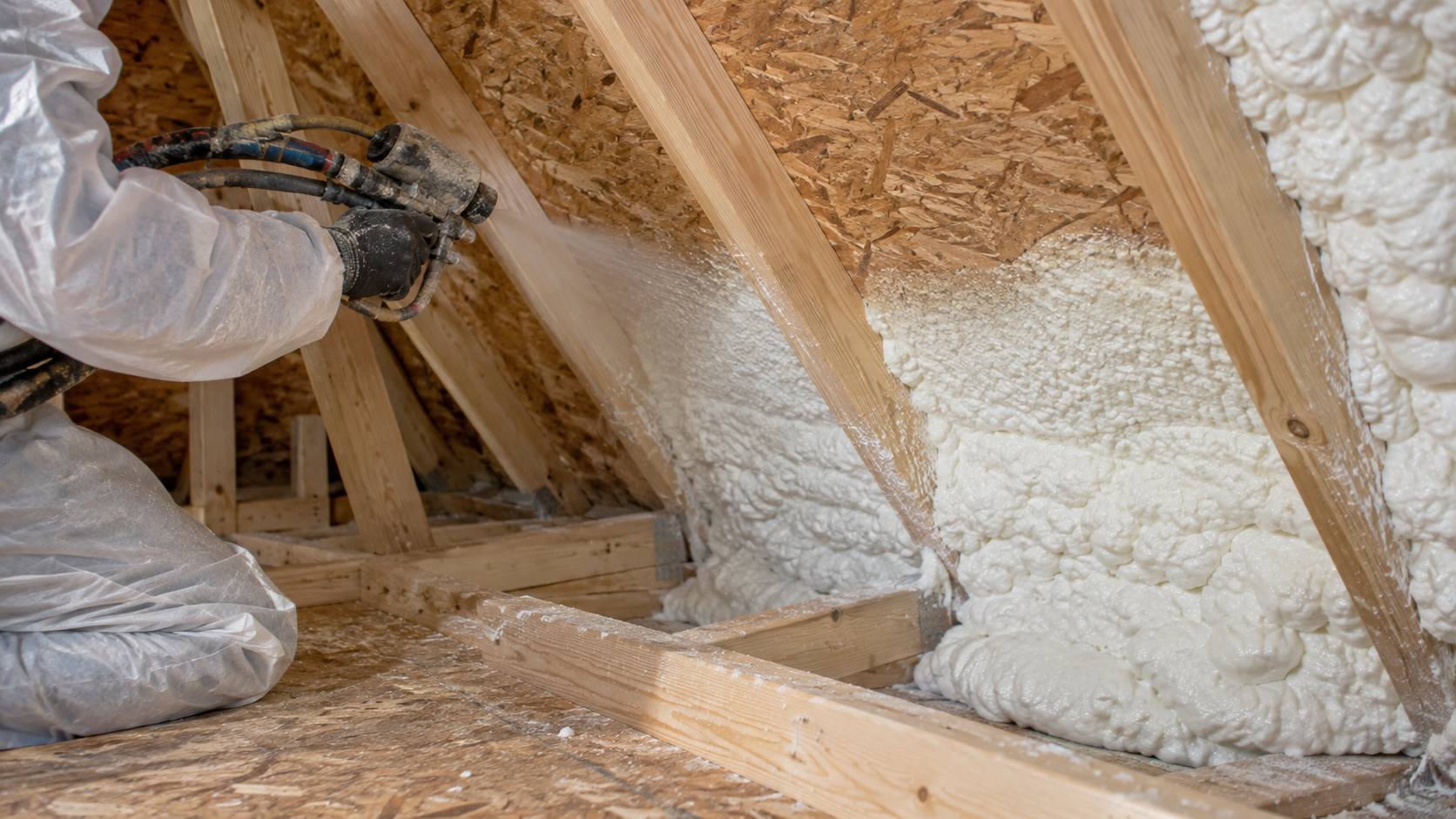
When we install spray foam in an Ozark attic, we are doing two things at once: insulating and air-sealing in a single pass. The foam expands to fill every gap, crack, and penetration it contacts. There is no separate air-sealing step because the foam handles it.
Open-Cell Spray Foam
Open-cell foam is lighter and more flexible. It is an excellent choice for attic floors and interior wall cavities. It provides strong air-sealing performance and good thermal resistance, and it allows some vapor permeability — which matters in Missouri's mixed-humid climate where you want walls to be able to dry.
Closed-Cell Spray Foam
Closed-cell foam is denser and more rigid. It is a Class II vapor retarder, which means it slows moisture movement significantly. We use closed-cell in crawl spaces, on rim joists, and in any application where moisture control is the primary concern alongside thermal performance. It also adds structural rigidity to the surfaces it bonds to.
Blown-In Fiberglass or Cellulose
Blown-in materials are cost-effective and meet code minimums. They do not air-seal on their own. Without a dedicated air-sealing pass before installation, they leave the bypasses open. In a new home, those bypasses are often hidden under the insulation and never addressed.
The Ozark Climate Makes This Matter More
Ozark sits in Climate Zone 4, where summers are hot and humid and winters are cold enough to drive significant heating loads. The DOE recommends R-49 for attic insulation in this zone, but many new homes are built to older local code minimums that fall short of that target.
The bigger issue is not the R-value number — it is the air leakage. A home with R-38 blown-in and no air sealing will perform worse than a home with R-30 spray foam that is fully sealed. We see this play out in energy bills every year. Homeowners in newer Ozark subdivisions call us because their HVAC runs constantly and their utility bills do not match what they expected from a new house.
What We Find in New Ozark Attics
When we do a pre-install assessment, we look for the same things in every attic regardless of age:
Top plate bypasses: The gap between the wall framing and the attic floor is one of the biggest air leakage points in any house. In new construction, these are often left open.
Recessed light cans: Older can lights are notorious air leaks. Even newer airtight fixtures can have gaps around their rough-in boxes.
HVAC penetrations: Every duct, pipe, and wire that passes through the ceiling plane is a potential bypass. We seal all of them before or during foam application.
Attic hatch: The access panel to the attic is almost never insulated or air-sealed in new construction. It is a small area with an outsized impact on performance.
Our Process for Ozark Attic Jobs
We start with a walkthrough to identify every bypass and penetration. Before we spray, we seal the major air leakage points. Then we apply spray foam to the attic floor — or, in some cases, to the underside of the roof deck to create an unvented conditioned attic. The right approach depends on where your HVAC equipment and ductwork are located.
Most residential attic jobs in Ozark take one to two days from start to finish. We work around your schedule and leave the space clean.
After installation, the difference is usually noticeable within the first heating or cooling cycle. The HVAC does not run as long. The temperature in the house is more consistent from room to room. The upstairs bedrooms that were always too hot in summer or too cold in winter start behaving like the rest of the house.
Homeowners who properly insulate and air-seal their attics can save up to 20% on monthly energy bills according to EPA Energy Star estimates.
Frequently Asked Questions
Does spray foam make sense in a house that is only a few years old?
Yes. Age is not the determining factor — air sealing is. If your new home has bypasses around penetrations and the attic was insulated with blown-in material only, spray foam will address the gaps that the original installation left behind. We see meaningful performance improvements in homes that are two to five years old.
Will spray foam work with my existing HVAC system?
In most cases, yes. Reducing the thermal load on your home means your existing equipment runs less and lasts longer. If your system is significantly oversized or undersized for the home, we will mention it during the walkthrough, but spray foam does not require any changes to your HVAC.
How do I know if my attic needs spray foam or just more blown-in insulation?
If your current insulation has no air sealing underneath it, adding more blown-in material on top will not solve the problem — it will just add more insulation over the same bypasses. We can assess your attic and tell you exactly what is happening before you spend money on anything.
Bottom line: Newer homes in Ozark's growing subdivisions are built to code minimums, not performance maximums — and spray foam closes the gap that blown-in insulation alone cannot.
If you are in Ozark or anywhere in Christian or Webster County and your energy bills do not match what you expected from a newer home, we would like to take a look. Learn more about our spray foam insulation services in Ozark or read about our attic spray foam insulation process. Call us at 417-224-8734 or request a free estimate — we serve Ozark, Springfield, Nixa, Republic, Battlefield, Rogersville, Willard, and Marshfield.