
Does Spray Foam Cause Mold? What Actually Happens Behind the Foam in a Humid Climate
Does spray foam insulation cause mold? No — when installed correctly, it prevents mold by eliminating the moisture and air movement mold needs to grow.
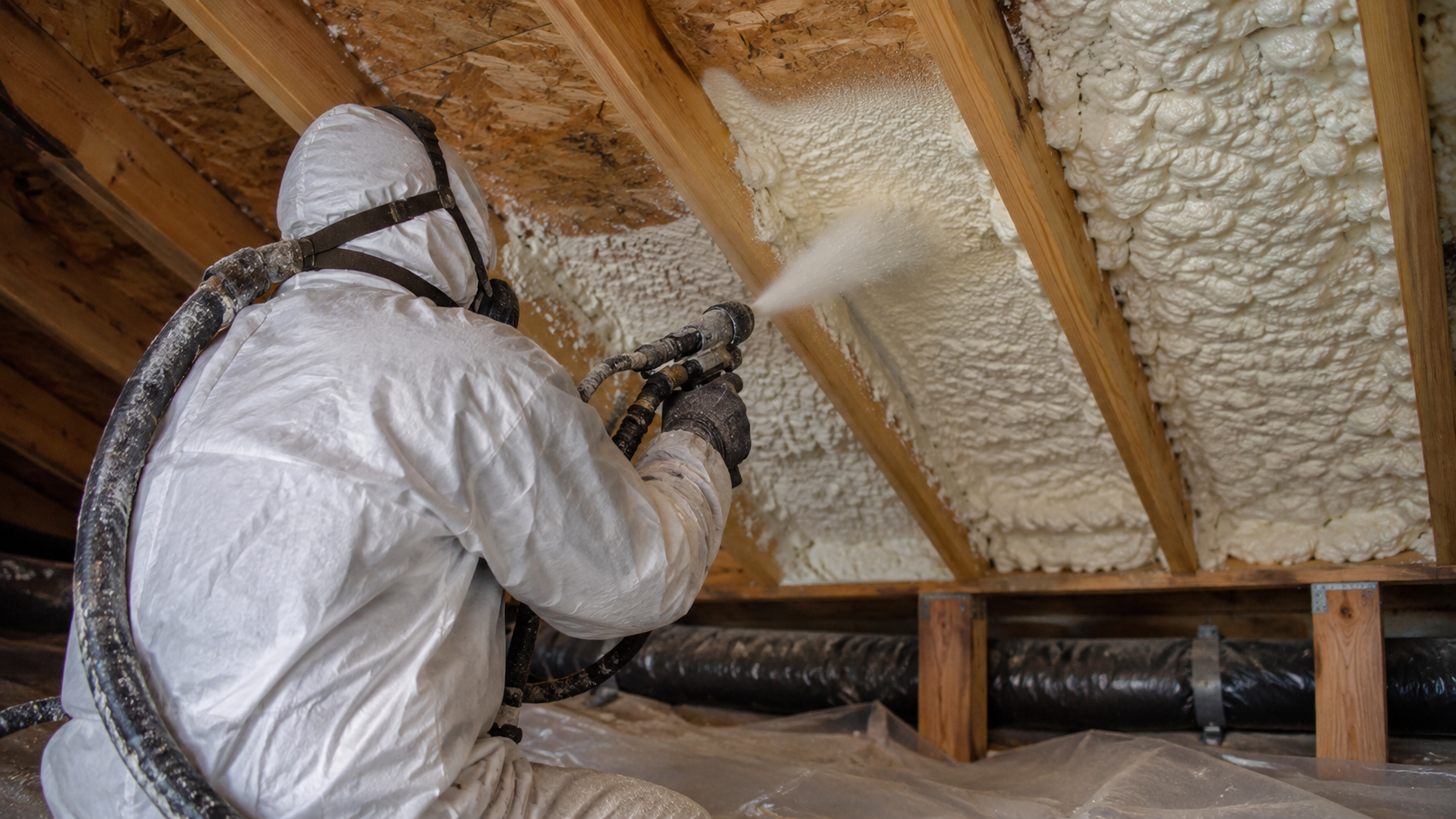
Does Spray Foam Cause Mold? What Actually Happens Behind the Foam in a Humid Climate
Does spray foam insulation cause mold? The short answer is no — when installed correctly, spray foam actively prevents mold by eliminating the moisture and air movement that mold needs to grow. In Missouri's humid summers, that distinction matters more than almost anywhere else in the country.
Why People Ask This Question
We hear this concern regularly from homeowners in Springfield, Ozark, and Nixa. The worry usually goes something like this: "If you seal everything up tight, won't moisture get trapped and cause mold behind the foam?" It's a fair question, and it deserves a straight answer.
Mold needs three things to grow: an organic food source, temperatures between roughly 40°F and 100°F, and moisture. Spray foam disrupts that cycle — but only if the right type is used and the installation is done properly. The foam itself is an inert polymer. It gives mold nothing to eat.
What Closed-Cell Foam Actually Does to Moisture
Closed-cell spray foam is a Class II vapor retarder. That means it dramatically slows the movement of water vapor through your walls, attic, or crawl space. When warm, humid Missouri air tries to push through your building envelope and hit a cold surface — a roof deck, a rim joist, a wall cavity — it condenses. That condensation is where mold starts.
Closed-cell foam stops that process at the source. It creates a continuous, rigid barrier that warm air cannot penetrate. No air movement means no condensation. No condensation means no moisture accumulation. No moisture means mold cannot establish itself.
The foam also bonds directly to wood framing, concrete, and metal. It does not leave gaps or voids where humid air can pool. A properly installed closed-cell job is essentially a monolithic shell around your building's most vulnerable surfaces.
Open-Cell Foam Is a Different Story
Open-cell spray foam is porous. It expands to fill cavities and provides excellent air sealing, but it can absorb and hold water if moisture gets in. In a dry climate, that is rarely a problem. In Missouri — where summer humidity regularly runs above 70% and we get heavy rain events throughout the year — open-cell foam in certain locations carries more risk.
We do not use open-cell foam in crawl spaces or on the underside of roof decks in our service area. Those are the two locations where moisture exposure is highest and where a vapor-permeable foam can work against you. In interior walls and some attic applications, open-cell can be appropriate, but the decision depends on the specific assembly and the moisture load that location sees.
The Real Risk: Applying Foam Over Existing Problems
Here is where mold issues actually come from in spray foam jobs: the foam goes in over a surface that already has moisture, existing mold, or an active leak. The foam seals that problem in rather than solving it.
We inspect every surface before we spray. If we find wet wood, active condensation, or visible mold, we stop. The moisture source has to be identified and corrected first. Existing mold has to be professionally remediated before any foam goes down. Skipping that step does not save money — it creates a much more expensive problem later.
This is not unique to spray foam. Any insulation installed over a wet or moldy surface will make things worse. The difference with spray foam is that once it cures, you cannot easily pull it back to check what is underneath. That is exactly why the pre-installation inspection matters so much.
What Happens in Missouri's Climate Specifically
Greene, Christian, and Webster counties sit in a mixed-humid climate zone. Summers are hot and wet. Winters are cold enough to create significant temperature differentials across your building envelope. That combination — warm humid air outside, cold surfaces inside — is exactly the condition that drives condensation and mold in poorly insulated homes.
Older homes in Marshfield, Rogersville, and Willard often have fiberglass batts in the attic that have absorbed decades of moisture. The batts sag, lose R-value, and leave gaps where humid air circulates freely. When we replace that assembly with closed-cell foam on the underside of the roof deck, we move the thermal boundary to the roof line and eliminate the attic as a humid, unconditioned space.
The result is an attic that stays close to interior temperature year-round. No more condensation on the roof deck. No more mold-friendly environment sitting directly above your living space.
Closed-Cell vs. Open-Cell for Mold Resistance
Closed-Cell Spray Foam Water absorption: less than 2% by volume. Acts as a Class II vapor retarder. Rigid, dense structure bonds to substrate and leaves no voids. Appropriate for crawl spaces, rim joists, roof decks, and exterior walls in Missouri's climate.
Open-Cell Spray Foam Porous, flexible structure. Excellent air sealing but vapor-permeable. Can absorb water if exposed to moisture. Better suited for interior walls and applications where vapor permeability is acceptable or desired.
What We Do Before Every Job
Before we spray a single board foot, we walk the space with a moisture meter. We check wood framing, concrete walls, and any surface that will be in contact with the foam. If readings are elevated, we identify the source — whether that is a plumbing leak, a grading issue pushing water against the foundation, or condensation from an HVAC system.
We also look for existing mold. If we find it, we tell the homeowner directly and refer them to a remediation contractor before we schedule the foam work. That conversation is never comfortable, but it is the right one to have.
After the foam cures, we do a final walkthrough. Closed-cell foam should be uniform in color and texture. Soft spots, discoloration, or areas that did not fully cure are addressed before we leave the job.
FAQ
Can mold grow on spray foam itself?
Closed-cell spray foam is an inert polymer — it provides no organic material for mold to feed on. Mold cannot grow on the foam itself. However, if organic debris like dust or wood particles accumulate on the foam surface over time, mold could theoretically grow on that debris. This is rarely a practical concern in a properly sealed space.
What if I already have mold in my attic or crawl space?
Existing mold must be professionally remediated before spray foam is installed. Spraying over active mold does not kill it — it seals it in and can make remediation significantly more difficult and expensive later. We will not install foam over a surface with visible mold growth.
Does spray foam eliminate the need for a dehumidifier?
In most cases, a properly installed closed-cell foam job dramatically reduces the moisture load in your home and may eliminate the need for supplemental dehumidification. However, in homes with high occupant moisture loads or specific HVAC configurations, a whole-home dehumidifier may still be recommended. We assess this on a job-by-job basis.
Bottom line:
Spray foam does not cause mold — improper installation, skipped inspections, and foam applied over existing moisture problems do. When we install closed-cell foam at Foam Fortress, we treat the pre-installation inspection as part of the job, not an afterthought.
If you have questions about moisture in your attic or crawl space, we are happy to take a look. Our service area covers Springfield, Nixa, Ozark, Republic, Battlefield, Rogersville, Willard, and Marshfield. You can learn more about how we handle crawl space condensation and mold risks in Missouri homes and why spray foam is ideal for Missouri's humid summers.